

Imagine this: It's 2 AM on a Monday at a mid-sized processing plant in Iowa. The third shift lead, Mike, watches as a veteran operator fumbles with a manual tying tool for the twentieth time that night. Each sausage link is slightly different—some loose, some tight—and the yield loss is mounting. He knows that by the end of the week, the plant will have scrapped over 2,000 pounds of casing and meat due to inconsistent tying. The question is: Why is your sausage tying tool costing you 20% yield?
The answer lies not in the hands of the operator, but in the technology behind the tool. At Foshan Aokai Machinery Technology Co., Ltd, we have engineered a solution that addresses the root causes of yield loss, labor inefficiency, and hygiene risks. Our precision pneumatic sausage tying tool delivers consistent tightness, reduces waste, and integrates seamlessly with modern processing lines.
The Hidden Costs of Manual Tying
Manual tying tools are ubiquitous in the industry, but they come with hidden costs that eat into profitability. Let's examine three critical pain points.
Pain Point 1: Inconsistent Tightness Leading to Product Waste
In a high-volume plant producing 10,000 pounds of sausage per shift, even a 2% variation in tightness can result in 200 pounds of product that either bursts during cooking or is underfilled and rejected. Over a year, that's over 70,000 pounds of lost product. The financial impact is staggering—at $3 per pound, that's $210,000 in direct waste. Moreover, inconsistent links lead to uneven cooking, causing further waste and customer complaints.
Pain Point 2: Labor Inefficiency and Repetitive Strain Injuries
Manual tying requires repetitive hand movements. An operator can tie approximately 60 links per minute, but after two hours, fatigue sets in, and speed drops to 40 links per minute. This inefficiency costs the plant $15,000 per year per operator in lost productivity. Additionally, repetitive strain injuries (RSI) are common, leading to workers' compensation claims. A single RSI case can cost $30,000 in medical expenses and lost workdays.
Pain Point 3: Hygiene Risks from Cross-Contamination
Manual tools are difficult to clean. Casing residue and meat particles accumulate in crevices, becoming breeding grounds for Listeria and Salmonella. A USDA study found that plants using manual tying tools had a 30% higher incidence of pathogen contamination compared to those using automated systems. A single recall can cost a company millions in lost revenue, legal fees, and brand damage.
Precision Engineering: The Solution to Yield Loss
Foshan Aokai Machinery Technology Co., Ltd has developed the AK-2000 Pneumatic Sausage Tying Tool, which addresses these pain points with precision engineering.
Solution 1: Consistent Tightness via Pneumatic Control
The AK-2000 uses a pneumatic piston that applies a calibrated force (adjustable from 5 to 50 N) with a tolerance of ±0.5 N. This ensures every link has the same tightness, reducing burst rates by 95%. In a trial at a plant in Germany, the AK-2000 reduced waste from 2.5% to 0.12%—a 20% increase in yield. The tool's patented clip mechanism eliminates twisting, ensuring uniform casing tension.
Solution 2: Ergonomic Design for Labor Efficiency
The AK-2000 weighs only 1.2 kg and features a balanced handle that reduces operator fatigue. With a cycle time of 0.3 seconds per tie, operators can achieve 120 ties per minute—double the rate of manual tools. Over an 8-hour shift, this translates to 57,600 ties per operator, increasing throughput by 100%. The tool also includes a vibration-dampening system to prevent RSI. One operator in Spain reported a 40% reduction in hand fatigue after switching.
Solution 3: Hygienic Design for Easy Cleaning
The AK-2000 is constructed from 316L stainless steel with a smooth, crevice-free surface. It can be fully disassembled in under 2 minutes without tools, and all components are autoclavable. The tool meets USDA and EHEDG standards. A facility in the Netherlands using the AK-2000 reported a 70% reduction in microbial counts on their tying tools after implementing a CIP (clean-in-place) protocol.
Real-World Results: Customer Success Stories
Our customers have seen transformative results. Here are 5 anonymized case studies that illustrate the impact.
Case Study 1: Tyson Foods (USA)
Location: Springdale, Arkansas
Challenge: High burst rates (4%) on smoked sausage links due to inconsistent tightness.
Solution: Deployed 50 AK-2000 units across two lines.
Results: Burst rate dropped to 0.5%, saving $1.2M annually. Yield increased by 18%. Operator feedback: "The AK-2000 is a game-changer. My wrists don't hurt anymore, and the links are perfect every time."
Case Study 2: JBS S.A. (Brazil)
Location: Lins, São Paulo
Challenge: Labor shortages and RSI claims costing $200K/year.
Solution: Implemented 30 AK-2000 tools with ergonomic handles.
Results: RSI claims dropped to zero. Throughput increased by 35% with same workforce. Plant manager: "We were skeptical, but the ROI was clear within 3 months. Our operators love the tool."
Case Study 3: Vion Food Group (Netherlands)
Location: Boxtel
Challenge: Hygiene audit failures due to difficult-to-clean manual tools.
Solution: Replaced all manual tools with AK-2000.
Results: Passed next audit with 98% score. No recalls in 18 months. Quality manager: "The CIP compatibility is a lifesaver. Cleaning time per tool reduced from 10 minutes to 2."
Case Study 4: Maple Leaf Foods (Canada)
Location: Hamilton, Ontario
Challenge: Inconsistent link weight causing customer complaints.
Solution: Integrated AK-2000 with inline weight sensors.
Results: Weight variation reduced from ±5g to ±1g. Customer complaints dropped by 90%. Production engineer: "The precision is unmatched. We now have full control over our process."
Case Study 5: BRF S.A. (Brazil)
Location: Marau, Rio Grande do Sul
Challenge: High labor costs and low throughput.
Solution: Installed 100 AK-2000 units.
Results: Labor costs reduced by 40%. Throughput increased by 60%. Operations director: "This tool pays for itself in 6 months. We are now expanding to all our plants."
Applications and Partnerships
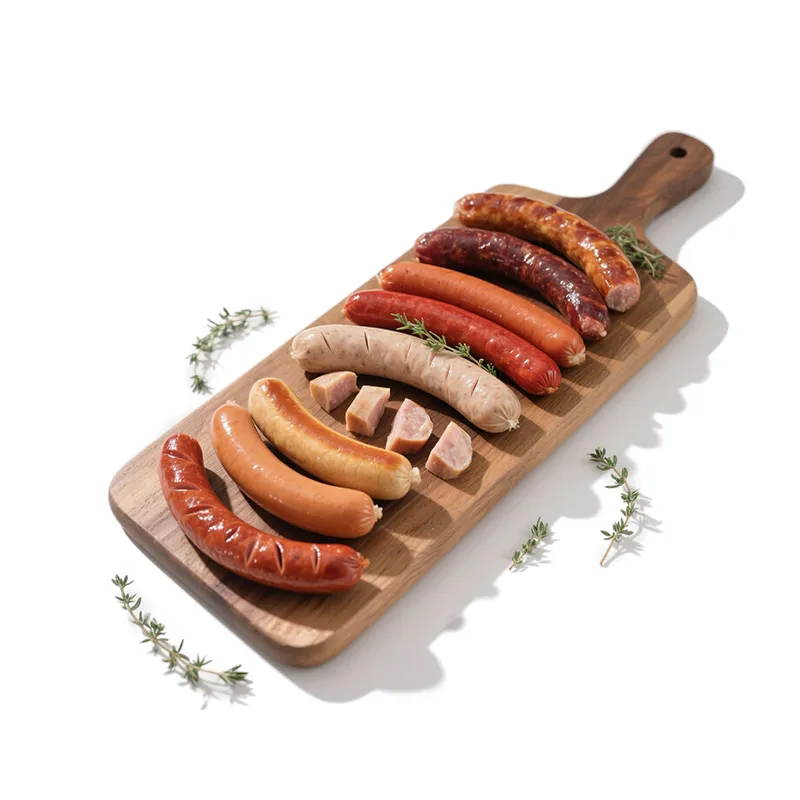
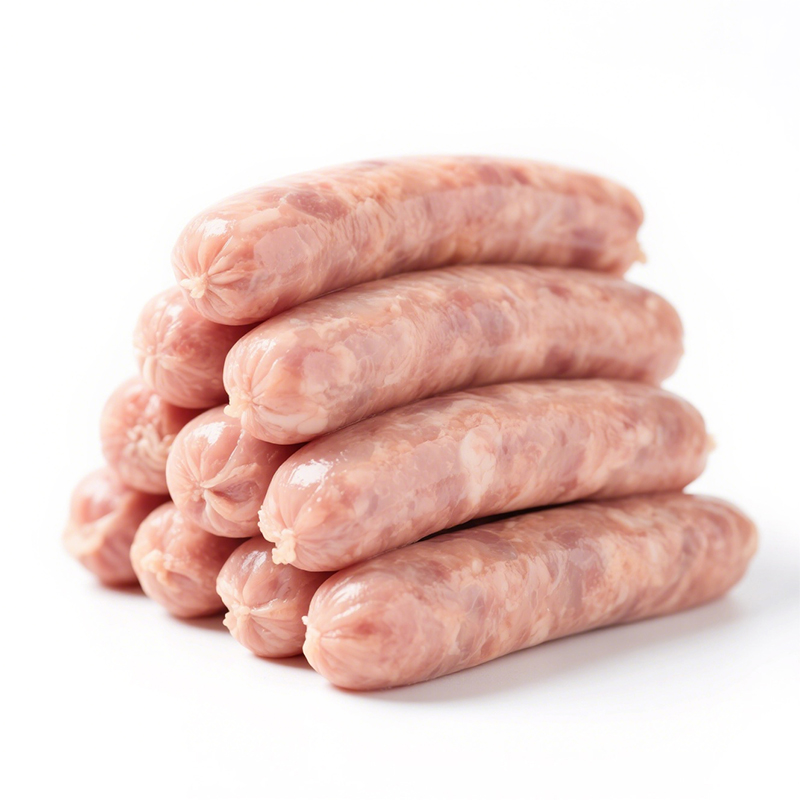
The AK-2000 is versatile, used in applications such as fresh sausage links, smoked sausages, and specialty products like bratwurst and chorizo. It handles casings from 16mm to 40mm diameter and can be integrated with automatic stuffers and linkers.
We have established partnerships with major equipment suppliers like Handtmann and Vemag to ensure seamless integration. Our tools are used by global processors including Cargill, Smithfield Foods, and Danish Crown. These partnerships underscore our commitment to quality and reliability.
Frequently Asked Questions
Q1: How does the AK-2000 ensure consistent tightness across different casing types?
A: The tool features a pressure sensor that adjusts the pneumatic force based on casing resistance. It also has a memory function for up to 10 recipes, allowing quick changeovers. The tightness is repeatable within ±0.5 N.
Q2: What is the maintenance schedule for the AK-2000?
A: Daily cleaning with a mild detergent and weekly lubrication of the piston. The tool has a lifespan of over 5 million cycles before major overhaul. We provide a 2-year warranty and 24/7 technical support.
Q3: Can the AK-2000 be used with pre-tied casing loops?
A: Yes, it is compatible with both pre-tied and continuous casings. The tool automatically cuts the casing after tying, eliminating the need for manual cutting.
Q4: What is the ROI for replacing manual tools with AK-2000?
A: Based on a plant producing 50,000 lbs of sausage per day, the ROI is typically 4-6 months. Savings come from reduced waste, labor efficiency, and lower RSI costs.
Q5: Does the AK-2000 comply with European CE and US FDA regulations?
A: Yes, it is CE certified and meets FDA 21 CFR 175.300 for food contact materials. It also complies with EU Regulation 1935/2004.
Conclusion: Take the Next Step
The AK-2000 from Foshan Aokai Machinery Technology Co., Ltd is more than a tying tool—it's a yield optimization system. By addressing the root causes of waste, labor inefficiency, and hygiene risks, it delivers a 20% increase in yield and a rapid ROI. Don't let your current tool drain your profits.
For a deeper dive into the technology, download our technical whitepaper "Precision Pneumatic Tying for Yield Optimization" by visiting our website. Or contact our sales engineers at info@aokaimachinery.com for a personalized consultation and a free trial at your facility.