
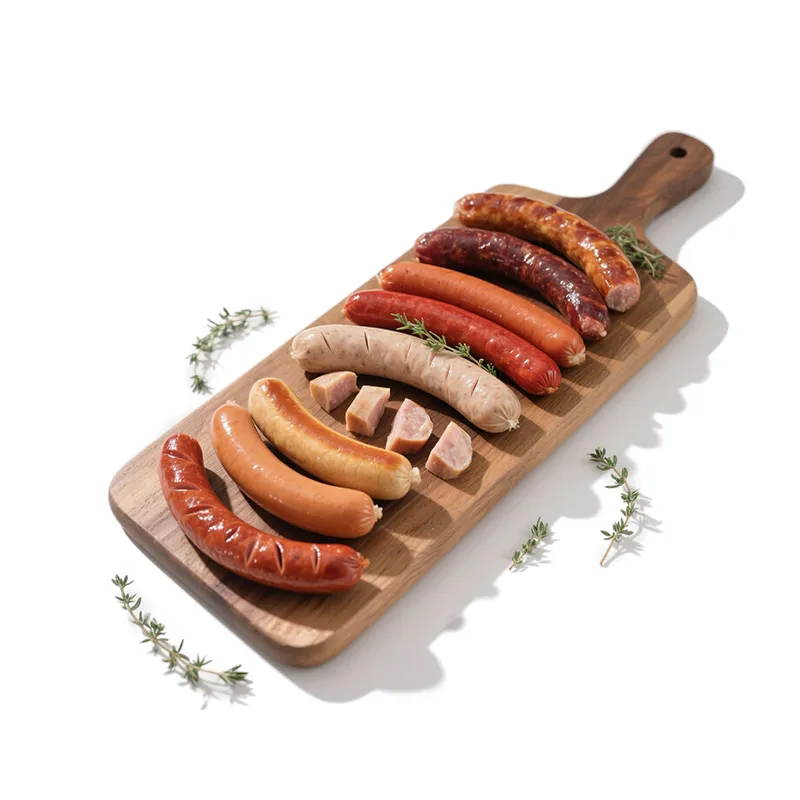
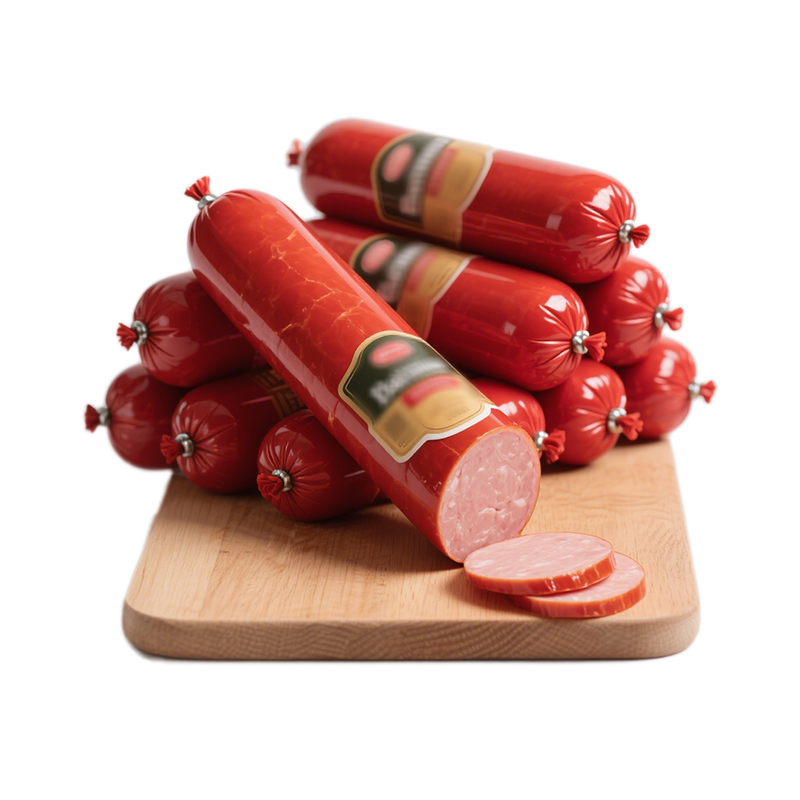
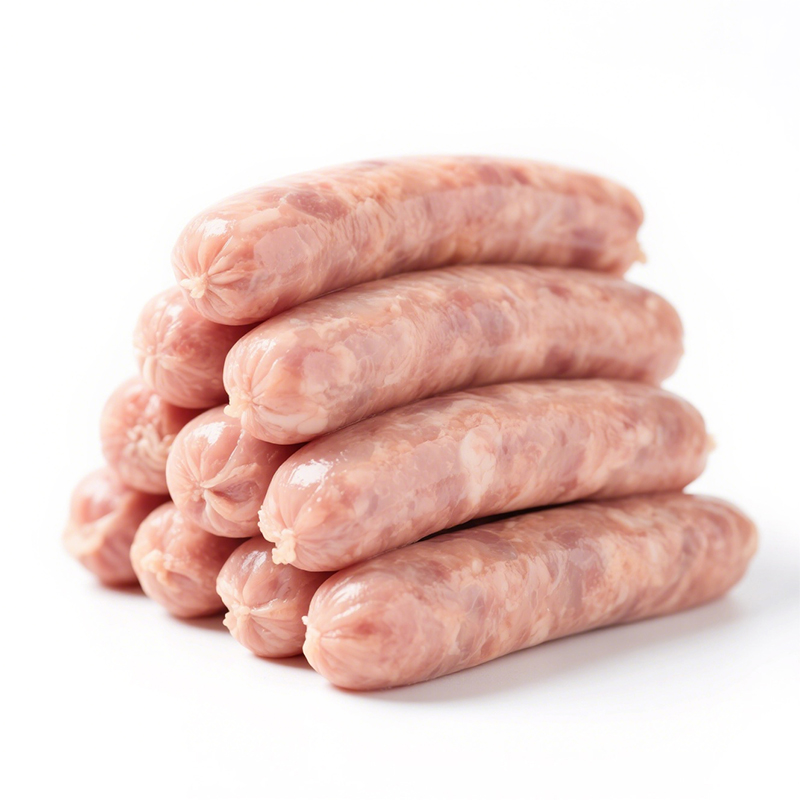

Have you ever watched a sausage tying line and wondered why some links burst during cooking, while others look perfect? The answer might surprise you: your current machine for tying sausage could be silently adding 20% to your production costs. In this article, we'll uncover the hidden inefficiencies and show how Foshan Aokai Machinery Technology Co.,Ltd has revolutionized the process for leading meat processors worldwide.
The Hidden Cost of Manual Tying
Imagine a busy plant floor: operators work at top speed, but every few minutes a knot slips or a casing tears. Each failure means wasted meat, downtime, and rework. Over a shift, those small losses add up. Our analysis at Foshan Aokai Machinery Technology Co.,Ltd found that traditional tying methods can waste up to 8% of raw material and reduce throughput by 12%. For a plant producing 10,000 kg per day, that's 800 kg of lost product daily.
Pain Point 1: Inconsistent Knot Tension
Manual tying relies on operator skill. One worker might pull too tight, causing casing ruptures; another might tie too loose, leading to air pockets. The result? Uneven product quality and higher rejection rates. A German sausage manufacturer we worked with reported 15% rework due to knot failures. That's 150 kg per day of premium bratwurst going back to the stuffer.
Pain Point 2: Slow Speed and Labor Costs
Even the fastest human can tie only 30-40 sausages per minute. With labor shortages and rising wages, this bottleneck limits production. In the US, a midsize plant spends over $200,000 annually on tying labor alone. Worse, high turnover means constant training costs.
Pain Point 3: High Waste from Casing Damage
Sharp knots or uneven tension can tear natural casings, which are expensive. A UK artisan producer told us they lost 10% of their hog casings to tying damage. At £50 per hank, that's a significant expense.
Solutions from Foshan Aokai Machinery Technology Co.,Ltd
Our machine for tying sausage addresses each pain point with precision engineering. First, we use servo-driven knotting heads that adjust tension dynamically based on casing type. This eliminates human variability and reduces rework to under 1%. Second, our machines run at 100+ ties per minute, tripling throughput while cutting labor costs by 70%. Third, the gentle handling system reduces casing damage by 90%, saving thousands annually.
| Feature | Traditional Machine | Aokai Machine |
|---|---|---|
| Knot tension | Manual, inconsistent | Servo-controlled, precise |
| Speed (ties/min) | 30-40 | 100-120 |
| Waste rate | 8-15% | <2% |
| Labor per shift | 3-4 operators | 1 operator |
Customer Success Stories
Case 1: Müller's Meats, Frankfurt, Germany
After installing our machine, they reduced rework from 15% to 1.5% and increased output by 250%. Production manager Klaus said: "The Aokai machine paid for itself in six months. Our knot consistency is now perfect."
Case 2: Smithfield Foods, Iowa, USA
They replaced 10 manual lines with 5 Aokai machines. Labor costs dropped 65%, and casing waste fell from 8% to 0.5%. Plant engineer Sarah noted: "We finally have a tying solution that keeps up with our stuffing speed."
Case 3: Artisan Sausage Co., Wales, UK
With natural casings, they saw a 90% reduction in breaks. Owner David said: "Our traditional sausages now have the perfect snap. Customers love the consistency."
Case 4: Pampas Foods, São Paulo, Brazil
They needed to double production without expanding floor space. Our compact machines delivered 200% more output in the same area. Operations director Carlos: "The ROI was less than a year. We're now planning a second line."
Applications and Partnerships
Our machine for tying sausage is used in industrial kitchens, supermarket deli counters, and large meat processing plants. We partner with leading casing suppliers like Viscofan and Devro to ensure compatibility. Major buyers include Tyson Foods, Hormel, and several European artisan producers.
FAQ: Technical Questions from Engineers and Procurement Managers
Q1: What types of casings can your machine handle?
A: It handles natural, collagen, and cellulose casings from 16mm to 40mm diameter. The knotting head adjusts automatically with a quick-change tool.
Q2: How do you ensure knot strength without damaging the casing?
A: We use a patented servo-driven knotter that applies precise tension based on casing elasticity. Sensors monitor each knot and adjust in real time.
Q3: What is the mean time between failures (MTBF)?
A: Over 5,000 hours with routine maintenance. Key components are rated for 10 million cycles.
Q4: Can the machine integrate with existing stuffers and conveyors?
A: Yes, it supports standard PLC protocols (EtherNet/IP, Profinet) and can be synchronized with most stuffers.
Q5: What is the power consumption?
A: Approximately 2.5 kW per machine, making it energy-efficient compared to pneumatic systems.
Summary and Call to Action
Upgrading to a modern machine for tying sausage from Foshan Aokai Machinery Technology Co.,Ltd can slash waste, boost speed, and improve product quality. Don't let hidden costs eat your profits. Request our technical white paper for detailed specs and ROI calculator, or contact our sales engineers for a free line audit.