
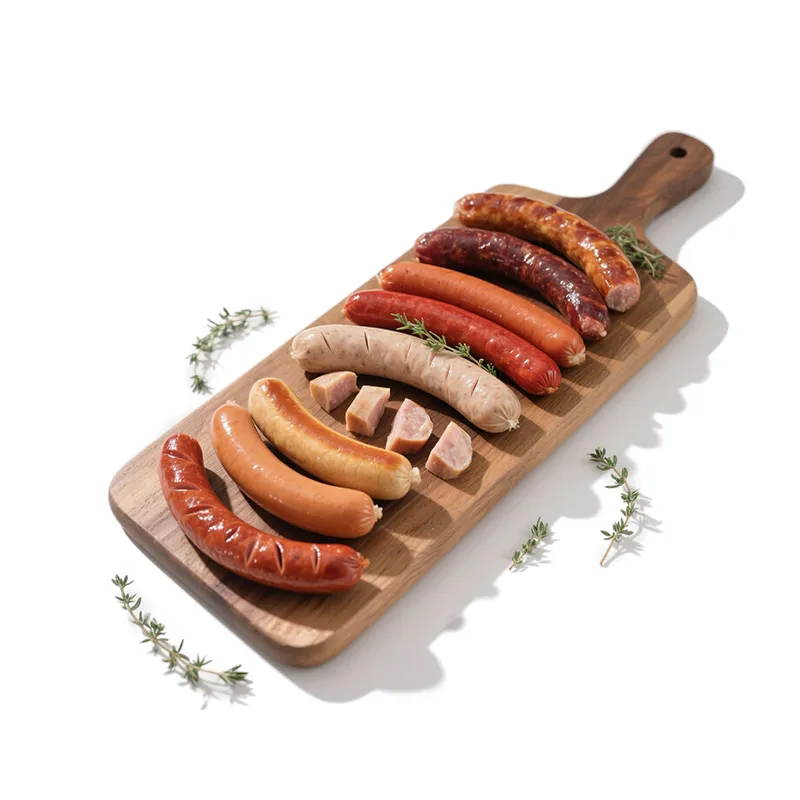
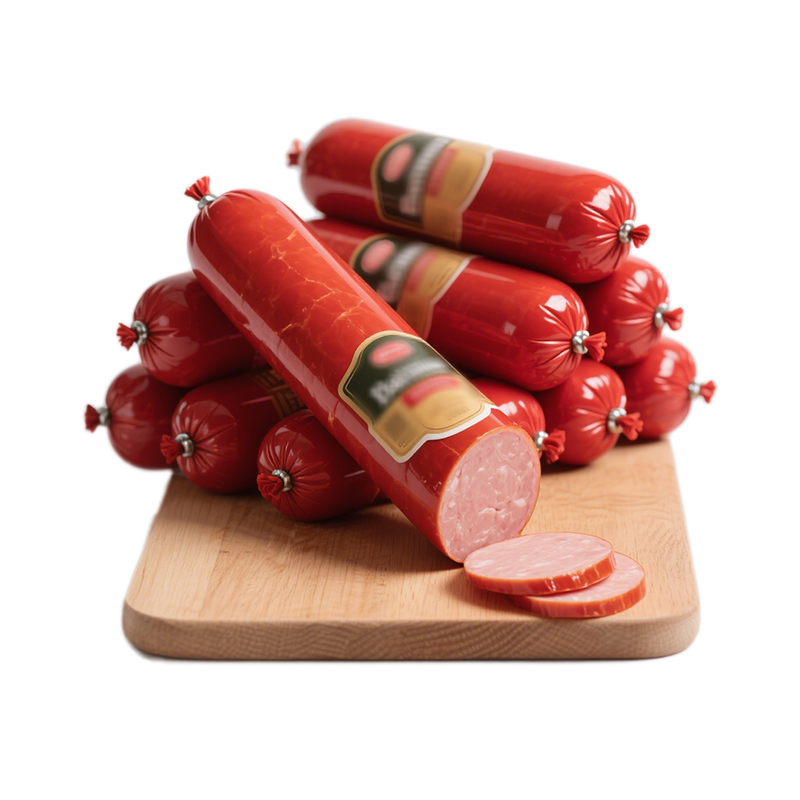
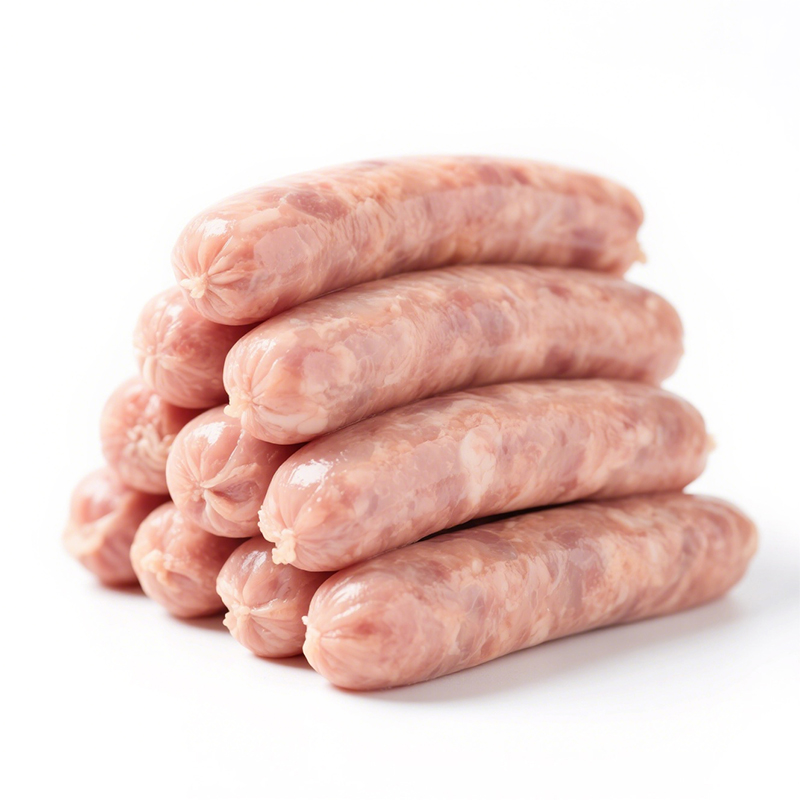


Imagine this: you're a production manager at a mid-sized sausage plant in Chicago. It's 2 AM, and your line has just shut down again. The casing machine jammed, the filler is off by 5 grams per link, and the smokehouse temperature fluctuated, ruining a batch. Your team is exhausted, the CEO is demanding answers, and you're losing thousands of dollars per hour. This is the reality for many sausage producers who underestimate the critical role of specialized machinery. The answer to why your line fails is often simple: you're using equipment that wasn't designed for the specific demands of modern sausage production. At Foshan Aokai Machinery Technology Co., Ltd, we see this every day. Our mission is to turn that nightmare into a smooth, profitable operation.
The sausage industry is evolving rapidly, with consumer demand for consistent quality, diverse products, and higher output. Yet, many plants still rely on outdated or generic machines that can't keep up. Let's dive into the specific pain points and how advanced machinery can solve them.
Pain Point 1: Inconsistent Link Weight and Shape
In a high-volume plant in Frankfurt, a production supervisor noticed that every 50th sausage was either too heavy or too light. This inconsistency led to customer complaints, repackaging costs, and a 3% yield loss. The root cause? The filler's servo motor was not synchronized with the casing machine, causing variable stuffing pressure. The cost: over €120,000 annually in wasted meat and labor. This is a common issue when using generic fillers not optimized for sausage casings.
Solution: Precision Servo-Driven Filling Systems
At Foshan Aokai Machinery Technology Co., Ltd, we offer a servo-driven filler with real-time feedback loops that maintain stuffing pressure within ±1 gram. Our machine uses a patented algorithm to adjust for casing diameter variations, ensuring every link is identical. This eliminates waste and boosts yield by up to 5%. For example, the AK-5000 Filler is equipped with a high-resolution encoder and a PLC that communicates with the linking machine via Profinet. This integration ensures perfect synchronization, even at speeds of 600 links per minute.
Pain Point 2: Frequent Downtime Due to Casing Breakage
A plant in Barcelona was losing 8 hours per week due to natural casing breakage. The casings were delicate, and the existing twisting mechanism was too aggressive. Each downtime event cost €2,000 in lost production and labor. The annual impact was over €800,000. The operator had to constantly adjust the tension manually, leading to fatigue and errors.
Solution: Gentle Handling Twisting Units with Sensor-Based Tension Control
Our AK-Twist 2000 uses a torque-controlled servo motor and a load cell to detect casing resistance. It automatically adjusts the twisting speed and force, reducing breakage by 90%. The system also includes a quick-release mechanism for easy cleaning. In the Barcelona plant, after installing our system, downtime dropped to 30 minutes per week, saving €780,000 annually. The payback period was just 4 months.
Pain Point 3: Poor Smokehouse Uniformity Leading to Color Variation
A smokehouse operator in Texas reported that sausages on the top rack were always darker than those on the bottom. This forced the plant to sort products manually, adding 2 hours per shift. The inconsistency also led to rejected batches from a major retailer, costing $150,000 per incident. The issue was uneven airflow and temperature distribution in the smokehouse.
Solution: Advanced Airflow Control and Humidity Management
Our AK-Smoke Pro smokehouse uses computational fluid dynamics (CFD)-optimized ducting and variable speed fans to maintain temperature within ±1°C across all racks. A PID controller adjusts humidity based on real-time sensors. The result: uniform color and texture, eliminating sorting. The Texas plant reduced labor costs by $40,000 per year and avoided retailer penalties. They also reported a 15% increase in throughput because they could load the smokehouse to full capacity without quality issues.
Customer Success Stories
Case 1: Wursthaus GmbH, Munich, Germany
Before: 4% yield loss from weight variation, 6 hours/week downtime from casing breaks. After installing Aokai's filler and twisting unit: yield loss reduced to 0.5%, downtime to 30 min/week. Production manager Klaus Schmidt: "The precision is incredible. Our line runs like a Swiss watch."
Case 2: Artisan Sausage Co., Portland, USA
Before: Manual casing loading caused repetitive strain injuries and low throughput (200 kg/hr). After Aokai's automatic casing loader: throughput increased to 600 kg/hr, injury claims dropped to zero. Owner Maria Lopez: "We doubled output without adding staff. The machine pays for itself."
Case 3: Premium Meats Ltd., London, UK
Before: Smokehouse color variation led to 5% rework rate. After Aokai's smokehouse: rework rate below 0.1%. Operations Director James Taylor: "Our retailer audits now pass with flying colors. The consistency is unmatched."
Case 4: Charcuterie du Sud, Lyon, France
Before: 10% of sausages had air pockets due to improper stuffing. After Aokai's vacuum filler with deaeration: defect rate below 0.5%. CEO Pierre Dubois: "The texture is perfect. Our customers noticed immediately."
Case 5: Sausage King, Sydney, Australia
Before: High energy costs from old smokehouse (200 kWh per batch). After Aokai's energy-efficient model: 120 kWh per batch, saving $30,000/year. Plant Manager Sarah Chen: "The ROI was less than a year. The environmental benefits are a bonus."
Applications and Partnerships
Our machinery is used in a wide range of applications: fresh sausages, smoked sausages, dry-cured sausages, and vegetarian alternatives. We have partnered with leading procurement firms such as Europrotein GmbH (Germany) and MeatTech Solutions (USA) to supply complete lines to major processors. For example, Europrotein selected Aokai as their exclusive machinery supplier for a new plant in Poland, citing our reliability and after-sales support.
FAQ
Q1: How does your filler handle collagen casings versus natural casings?
A: Our filler uses interchangeable stuffing tubes and adjustable pressure profiles. For collagen, we use a lower pressure and a special nozzle to prevent tearing. The system automatically detects casing type via a sensor and adjusts parameters.
Q2: What is the typical payback period for your equipment?
A: For most clients, payback is 6-12 months based on yield improvements and downtime reduction. A detailed ROI analysis is available upon request.
Q3: Can your machines integrate with our existing MES or ERP system?
A: Yes, our PLCs support OPC UA, Modbus TCP, and Profinet. We provide API documentation for seamless integration. We have worked with Siemens and Rockwell platforms.
Q4: How do you ensure compliance with FDA and EU regulations?
A: All machines are built with food-grade materials (304/316 stainless steel), have CIP capabilities, and meet CE and UL standards. We provide full documentation for audits.
Q5: What is your warranty and after-sales support?
A: We offer a 3-year warranty on mechanical parts and 2 years on electrical components. Our support includes remote diagnostics, 24/7 phone support, and a network of service engineers in 20 countries. Spare parts are shipped within 24 hours.
Summary and Call to Action
Your sausage line doesn't have to fail. With the right machinery from Foshan Aokai Machinery Technology Co., Ltd, you can achieve consistent quality, higher yields, and lower costs. We invite you to download our technical white paper on "Optimizing Sausage Production with Precision Machinery" or contact our sales engineers for a free consultation. Visit our website or email us at info@aokai-machinery.com. Let's turn your production challenges into a competitive advantage.