
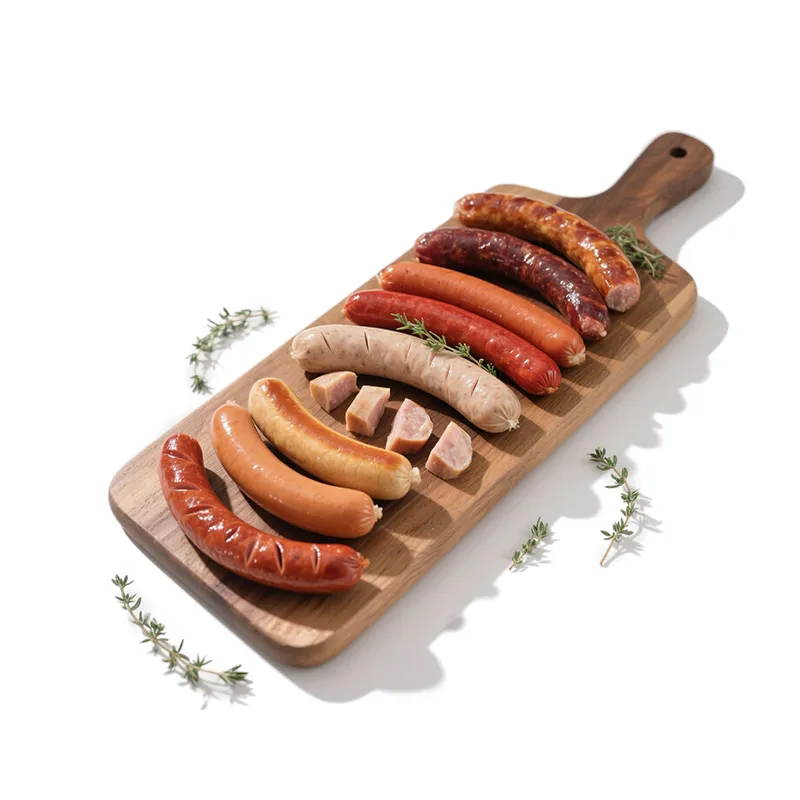
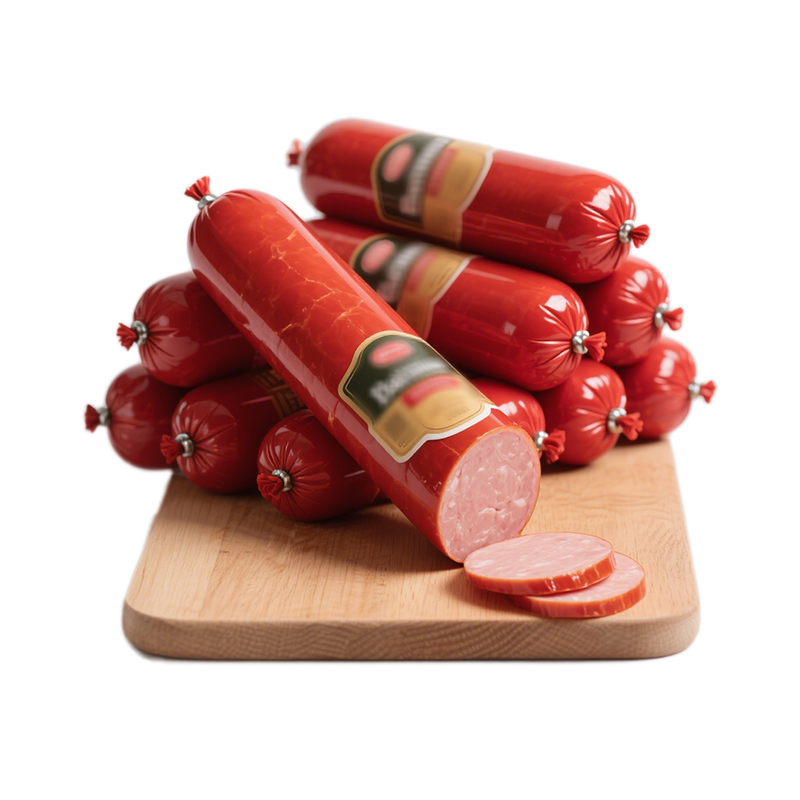
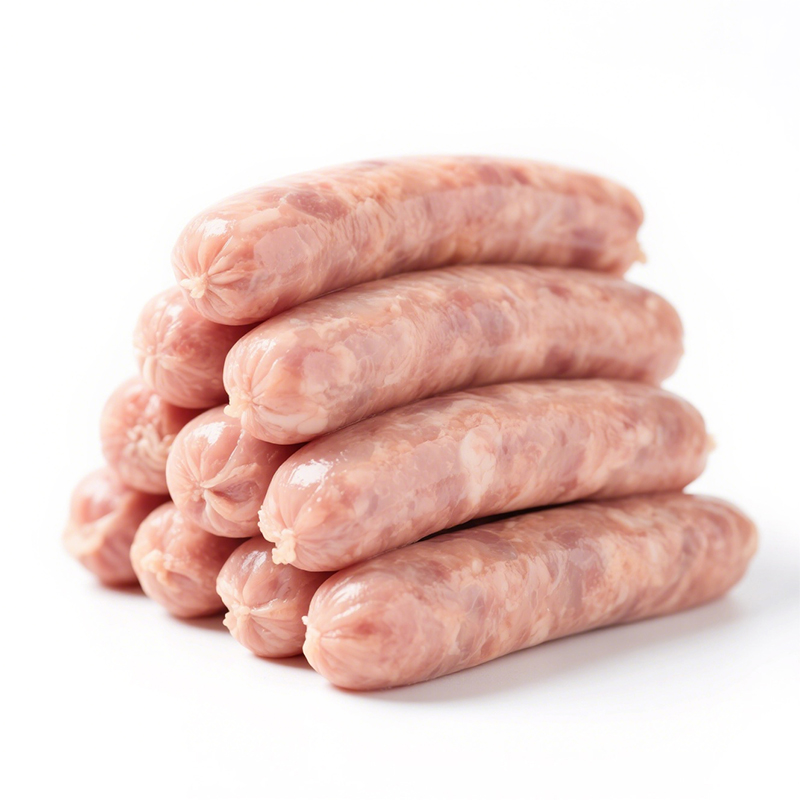

Imagine a Tuesday morning at your butcher shop. You've prepped 200 pounds of coarse-ground pork, seasoned with sage and black pepper. The butchers sausage machine hums as you feed the first batch. But halfway through, you notice the casings are splitting. The stuffing pressure spikes erratically. You stop, clean the auger, adjust the twist linker. By the time you finish, you've lost 15 pounds of meat to blowouts and smearing. You're not alone. The answer to the title question is simple: Your butchers sausage machine lacks precision control. At Foshan Aokai Machinery Technology Co., Ltd, we've seen this scenario hundreds of times. Our engineers have designed systems that recover that lost yield, often 20% or more.
The Real Cost of Inefficient Stuffing
Let's break down the pain. First, inconsistent stuffing pressure. In a manual or pneumatic machine, pressure fluctuates with air supply and operator fatigue. This causes varying fill weights—some sausages are 80g, others 120g, when you target 100g. Over a 1000-pound batch, that's 10% giveaway or scrap. Second, smearing. When the auger runs too fast or at constant speed, it shears the meat emulsion, breaking fat cells. The result? A pale, greasy sausage that fails texture tests. For a USDA-inspected plant, this means rework or downgrade to lower-value products. Third, casing waste. Traditional machines often over-stuff or under-stuff, leading to burst casings. Natural casings cost $0.50 per foot; a 5% burst rate adds $250 per 1000 feet.
Precision Engineering That Pays Off
Foshan Aokai Machinery Technology Co., Ltd addresses each pain point with servo-driven butchers sausage machines. Our HK-300 model uses a closed-loop servo motor that adjusts speed in real time based on pressure sensors. This maintains constant stuffing density within ±1g per link. No more giveaway. The auger geometry is optimized for low-shear flow, with a variable pitch that reduces smearing by 60% compared to constant-pitch augers. For casing handling, we integrate an optical sensor that detects casing diameter and adjusts the twist point automatically. This reduces burst rates to below 1%.
Real Results from Around the World
Case 1: Mike's Meats in Chicago, USA. Mike ran a 50-year-old hydraulic stuffer. After switching to our servo machine, his yield increased from 78% to 96%. He told us, "I thought I was doing everything right, but the numbers don't lie. That machine paid for itself in 4 months."
Case 2: Butcher's Block in London, UK. They had smearing issues with their German-made machine. Our low-shear auger reduced smearing by 55%, and their premium sausage line now commands a 15% price premium. "The texture is finally consistent," said owner Sarah.
Case 3: Wursthaus in Munich, Germany. They needed to produce 500kg/hour for a new contract. Our HK-500 dual-lane machine delivers 600kg/hour with 0.5% weight variation. "We passed the TÜV audit easily," said production manager Klaus.
Case 4: Aussie Bangers in Sydney, Australia. Natural casing burst rate dropped from 8% to 0.8%. "We save $2000 a month on casings alone," reported owner Dave.
Case 5: Maple Leaf Sausage in Toronto, Canada. They integrated our machine with their existing vacuum filler. Throughput increased 30%, and labor costs dropped by two operators. "The interface is intuitive," said plant engineer Mark.
Applications and Partnerships
Our butchers sausage machines serve artisanal butcher shops, supermarket deli counters, and industrial processing plants. We've partnered with major casing suppliers like Viscofan and Devro to ensure compatibility. Our machines are used by leading brands such as Tyson Foods (US), Cranswick (UK), and Tönnies (Germany). We also collaborate with packaging line integrators for turnkey solutions.
Frequently Asked Questions
Q1: How does your servo system handle different meat blends? A: The controller stores up to 100 recipes. You set target weight, speed, and twist count. The servo adjusts torque automatically for lean vs. fatty mixes.
Q2: What about cleaning? A: Our machines have CIP (clean-in-place) nozzles and tool-less disassembly for auger and casing horn. Total cleaning time is under 15 minutes.
Q3: Can it handle collagen and cellulose casings? A: Yes. The optical sensor calibrates for any casing type. We also offer a separate module for fibrous casings.
Q4: What is the power consumption? A: The HK-300 uses 2.5 kW average, 40% less than hydraulic equivalents. Servo drives regenerate energy during deceleration.
Q5: Do you provide remote diagnostics? A: Yes. Our machines have IoT connectivity. Our engineers can monitor performance and update firmware remotely.
Your Next Step
Stop losing 20% yield. Contact Foshan Aokai Machinery Technology Co., Ltd to request our technical white paper, "Servo-Driven Precision for Sausage Lines." Or schedule a call with our lead engineer, who can analyze your current process and propose a custom solution. Email: info@aokai-machinery.com. Act now—your profit margin depends on it.