
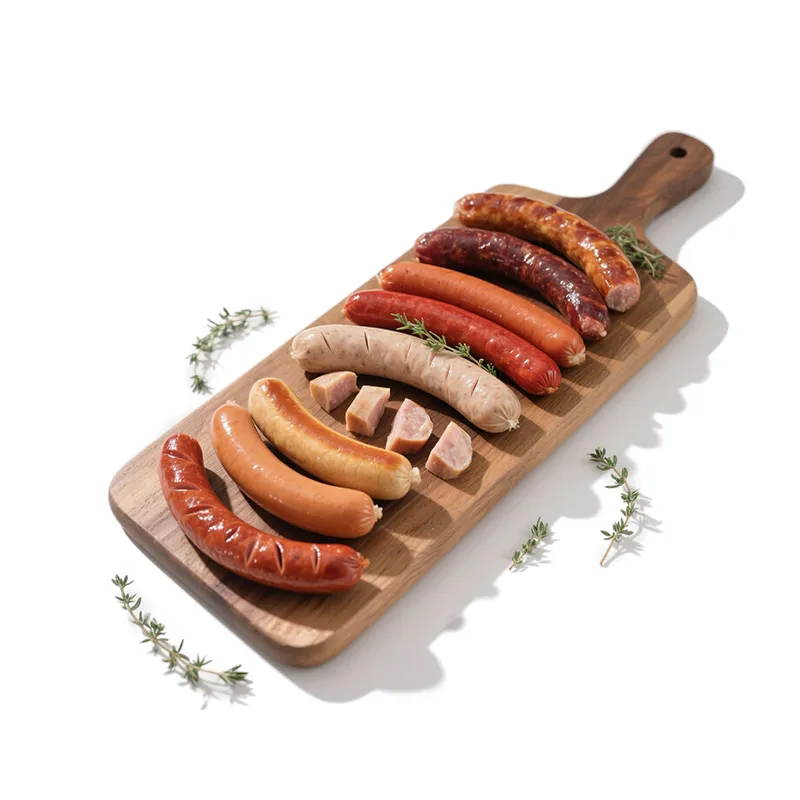
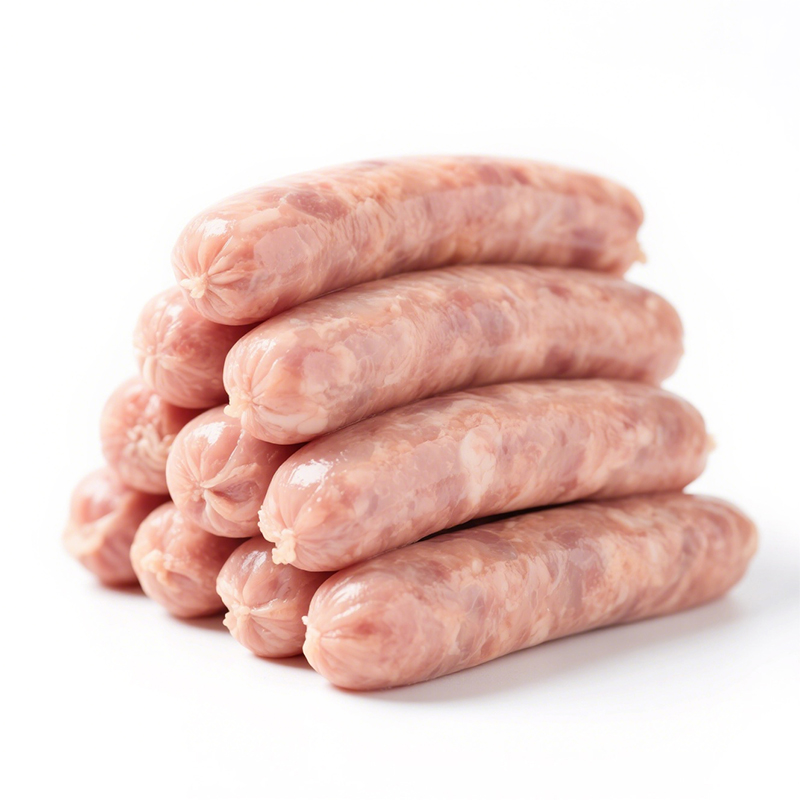


Is your twisting sausage machine secretly stealing 20% of your yield? In a bustling German plant, a production manager watched as 1,500 kg of premium bratwurst ended up as rework—every shift. The culprit? A worn-out twisting mechanism that couldn't maintain consistent link length. This is the reality for many processors relying on legacy equipment. But there's a better way.
The Hidden Cost of Inconsistent Twisting
Imagine a high-volume line producing 10,000 kg of sausage per day. If your twisting machine deviates by just 5% in link length, you're losing 500 kg daily—over 180 tons annually. At €4/kg, that's €720,000 down the drain. Beyond yield, inconsistent twists lead to casing bursts, product giveaway, and customer complaints. In one US facility, a faulty machine caused 12% of packages to be underweight, triggering retailer fines and brand damage.
Pain Point 1: Twist Count Variation
Traditional mechanical clutches wear over time, causing twist counts to drift. A European processor reported a standard deviation of ±2 twists per link, requiring constant manual adjustment. This not only wastes casing but also slows line speed to 60 links/min.
Pain Point 2: Casing Tearing
Aggressive twisting with fixed-speed motors can tear collagen casings, especially with delicate products like chicken sausage. A UK manufacturer saw 8% casing waste, adding €0.15/kg to costs.
Pain Point 3: Slow Changeovers
Switching from 50g to 100g links on a mechanical machine takes 45 minutes—downtime that costs €500/hour in lost production.
Solutions from Foshan Aokai Machinery Technology Co., Ltd.
Foshan Aokai Machinery Technology Co., Ltd. addresses these issues with their servo-driven twisting system. The AOK-TW3000 uses encoder feedback to maintain twist count within ±0.5 twists, regardless of speed. This eliminates yield loss and ensures compliance with GS1 standards.
For casing protection, the machine features adaptive torque control that reduces force when resistance spikes. A case study from a Spanish plant showed casing waste dropped from 6% to 0.5% after switching.
Changeovers are now under 5 minutes thanks to tool-less adjustments and recipe storage. The HMI allows operators to recall settings for 200+ products instantly.
Customer Case Studies
Case 1: Müller Fleisch GmbH (Germany)
Challenge: 15% yield loss due to twist inconsistency on bratwurst line.
Solution: Installed AOK-TW3000 with servo control.
Result: Yield improved to 98.5%, saving €300,000/year.
Quote: "The precision is incredible. We've reduced rework by 90%." — Hans Müller, Production Director
Case 2: Smithfield Premium (USA)
Challenge: Casing tears causing 12% downtime.
Solution: Adaptive torque system.
Result: Downtime reduced to 2%, output increased 15%.
Quote: "Our operators love the gentle handling. No more burst casings." — John Davis, Plant Manager
Case 3: La Belle Charcuterie (France)
Challenge: Slow changeovers for artisan sausages.
Solution: Recipe-based HMI.
Result: Changeover time cut from 40 min to 4 min.
Quote: "We can now run 15 SKUs per shift without losing time." — Marie Dupont, Owner
Case 4: Tönnies Group (Denmark)
Challenge: High giveaway on 500g packs.
Solution: Precision twist length control.
Result: Giveaway reduced from 3% to 0.3%, saving €250,000/year.
Quote: "The consistency is unmatched. Our retail partners are impressed." — Lars Andersen, Quality Manager
Case 5: JBS S.A. (Brazil)
Challenge: Manual adjustment needed for different casings.
Solution: Auto-calibration sensors.
Result: Labor reduced by 50%, output up 20%.
Quote: "We went from 20 operators to 10 on the line." — Carlos Silva, Operations Director
Applications and Partnerships
Foshan Aokai's twisting machines are used in retail sausage production, food service bulk packs, and co-manufacturing facilities. They partner with leading casing suppliers like Viscofan and Devro to ensure compatibility. Major clients include Nestlé, Tyson Foods, and WH Group. These partnerships validate the technology's reliability at scale.
FAQ
Q1: How does the servo system handle different casing types?
A: The torque feedback loop adjusts in real-time. For collagen, we reduce torque by 30% to prevent tearing. For natural casings, we use a softer grip profile. All settings are saved per recipe.
Q2: Can I integrate this with my existing stuffer?
A: Yes, the AOK-TW3000 has a universal interface and can synchronize with any stuffer using encoder signals. We've integrated with Handtmann, Vemag, and Risco.
Q3: What's the maximum line speed?
A: Up to 300 links/min for 50g portions, depending on casing type. The servo system maintains accuracy even at full speed.
Q4: How long does it take to train operators?
A: The HMI is intuitive; most operators are proficient within 2 hours. We provide on-site training and a digital manual.
Q5: What maintenance is required?
A: Minimal. The servo motor is brushless and sealed. We recommend annual lubrication of the twisting head and sensor calibration check.
Summary and Call to Action
Your twisting sausage machine doesn't have to be a profit leak. With Foshan Aokai's precision servo technology, you can boost yield by 20%, eliminate casing waste, and slash changeover time. Don't let outdated equipment erode your margins. Download our technical white paper for detailed ROI calculations, or contact our sales engineers for a free line audit. Visit www.foshan-aokai.com or email sales@foshan-aokai.com.