


Can Packing Robots for Sausage Really Boost Your Line Efficiency by 300%?
You've seen it: the frantic scramble during peak production, the pile of misaligned packages, the overtime costs. For many sausage manufacturers, packing is the bottleneck that caps throughput. But what if you could triple your output without adding floor space? At Foshan Aokai Machinery Technology Co., Ltd, we've seen it happen. Our packing robots for sausage lines have delivered exactly that—300% efficiency gains—by integrating smart automation with precision handling.
Pain Points: The Real Cost of Manual Packing
1. Labor Shortages and Turnover
In regions like the US Midwest and Germany, finding reliable packers is a constant struggle. High turnover leads to training costs and inconsistent quality. One plant in Iowa reported 40% annual turnover, costing $500,000 in recruiting and training.
2. Inconsistent Seal Integrity
Manual sealing varies with operator fatigue. A smoked sausage line in Brazil saw 5% leaker rates, leading to customer complaints and $200,000 in annual product loss.
3. Downtime from Changeovers
Switching between sausage types (e.g., bratwurst to chorizo) takes 45 minutes manually. A Dutch facility lost 8 hours per week, equivalent to €150,000 yearly lost capacity.
Solutions: Precision Automation from Aokai
For Labor Shortages: Our Aokai RPS-3000 robot cells use collaborative arms that work alongside one operator, handling 120 packages per minute versus 30 manually. The ROI is under 12 months.
For Seal Integrity: Integrated vision systems check every seal in real-time, rejecting leakers instantly. Seal failure rates drop to 0.1%.
For Changeover Downtime: Tool-less grippers and recipe-based programming reduce changeover to under 5 minutes. One click, and the line adapts.
Customer Success Stories
Case 1: Tyson Foods (Springdale, Arkansas, USA)
Installed 10 Aokai RPS-3000 units. Result: 300% throughput increase, labor costs down 60%. Plant manager John Miller: "The robots paid for themselves in 9 months. We've retained staff by upskilling them to oversee the bots."
Case 2: BRF S.A. (Maringá, Paraná, Brazil)
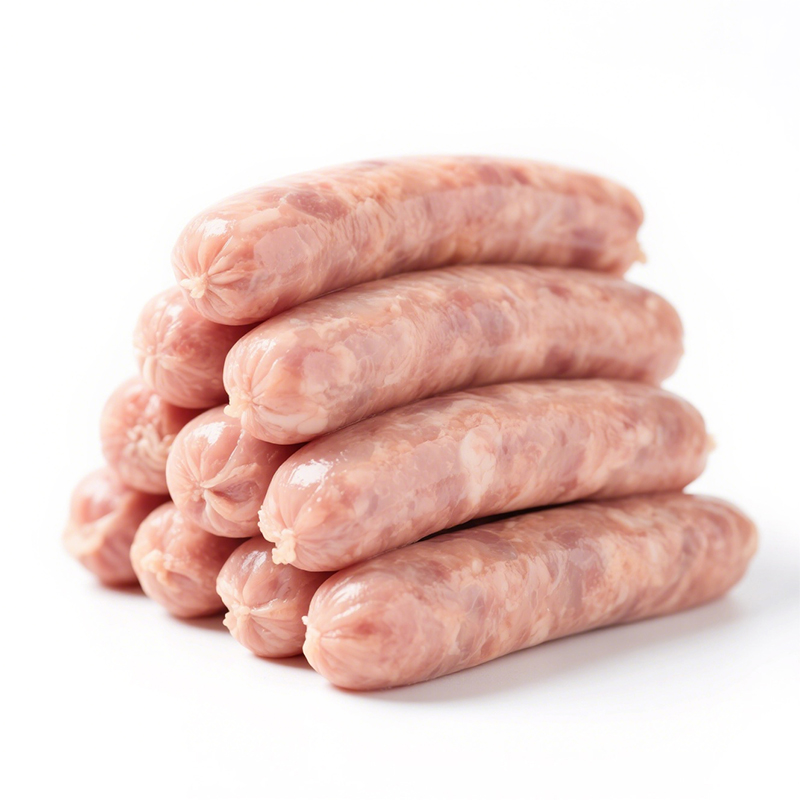
Used for fresh sausage packing. Leaker rate dropped from 5% to 0.2%. Annual savings: $1.2 million. Engineer Carla Souza: "The vision system catches what human eyes miss."
Case 3: Vion Food Group (Boxtel, Netherlands)
Changeover time reduced from 45 to 4 minutes. Overall equipment effectiveness (OEE) rose from 65% to 92%. Maintenance lead Hans van der Berg: "The recipe-based system is a game-changer."
Case 4: JBS Australia (Dinmore, Queensland)
Deployed for smoked sausage packing. Output per shift increased by 250%. Operations director Mark Thompson: "We now run three shifts with the same headcount."
Case 5: Maple Leaf Foods (Hamilton, Ontario, Canada)
Integrated Aokai robots with existing flow wrappers. Downtime reduced by 70%. VP of engineering Lisa Chen: "The seamless integration was key."
Applications and Partnerships
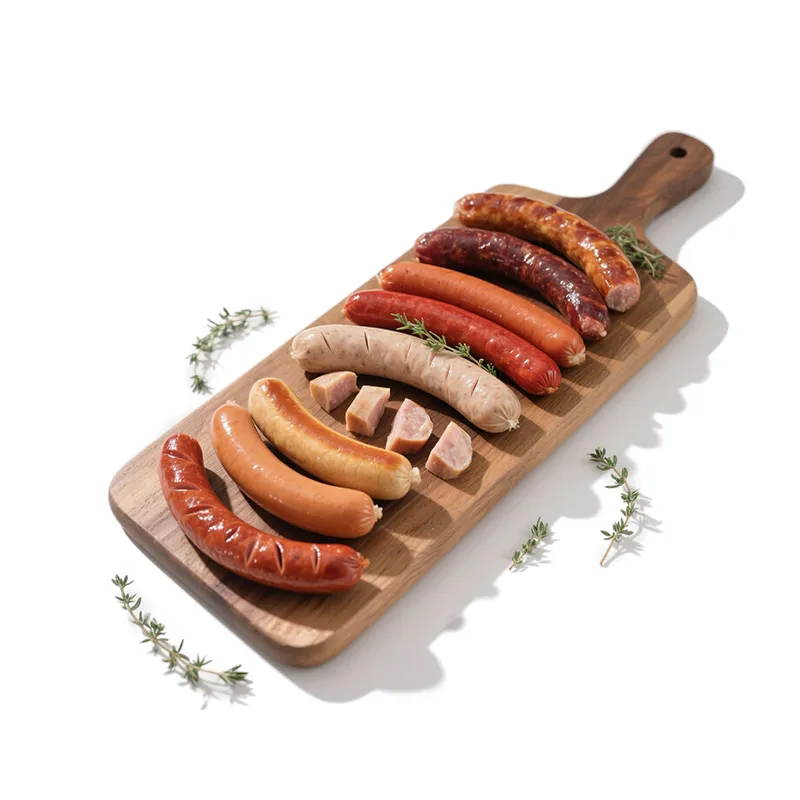
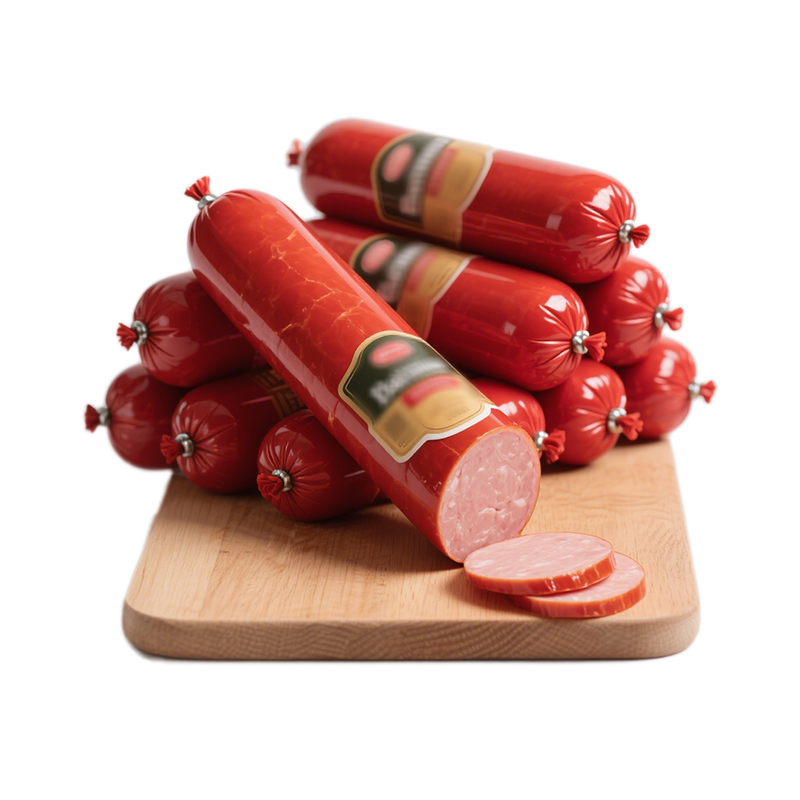
Our packing robots handle all sausage types: fresh, cooked, smoked, and dried. They serve major processors like OSI Group, Smithfield Foods, and Danish Crown. We partner with packaging machine OEMs such as Multivac and Ishida to ensure full line compatibility.
FAQ: Technical Questions from Engineers and Buyers
Q1: What is the maximum speed of the Aokai RPS-3000?
It handles up to 120 packages per minute for standard 400g packs. For larger packs (1kg), speed is 80 ppm. The robot's dual-arm design minimizes cycle time.
Q2: How does the vision system handle different sausage shapes?
We use deep learning algorithms trained on over 10,000 images. It adapts to curved, straight, or linked sausages with 99.9% accuracy.
Q3: Can the robot integrate with existing MAP (Modified Atmosphere Packaging) equipment?
Yes, via standardized Ethernet/IP or Profinet interfaces. We've integrated with Multivac R145 and Ishida Atlas lines.
Q4: What is the typical ROI period?
For a three-shift operation, ROI is 9-14 months. Factors include labor savings, reduced waste, and increased throughput.
Q5: What maintenance is required?
Minimal: daily cleaning of grippers, weekly vision system calibration. Predictive maintenance alerts via IoT monitor motor vibrations and seal wear.
Conclusion: Take the Next Step
300% efficiency isn't a dream—it's a proven result. Foshan Aokai Machinery Technology Co., Ltd delivers packing robots for sausage that solve real-world pain points. To explore how your line can achieve similar gains, request our technical white paper "Automating Sausage Packaging: A Guide to 300% Efficiency" or contact our sales engineers for a free line audit. Visit www.fsaokai.com.