


The global sausage processing industry is under growing pressure to produce more with fewer resources. Rising labor costs, unstable workforce availability, stricter food safety requirements, and increasing demand for consistent quality are pushing manufacturers to rethink traditional production methods.
For many sausage factories, the real challenge is no longer simply increasing production volume. The challenge is building a production system that can simultaneously improve efficiency, reduce labor dependency, and maintain stable product quality.
This is exactly where automation is reshaping the future of meat processing.
In one recent project, Aokai helped a meat processor upgrade from semi-manual production to a fully integrated automated sausage processing line. The result was significant:
Labor costs reduced by 40%
Production capacity increased by 50%
Product loss reduced by 3%
More importantly, the factory achieved more stable production performance and greater flexibility for future expansion.
This article explores how intelligent automation is transforming sausage manufacturing and why more food processors are adopting integrated processing systems.
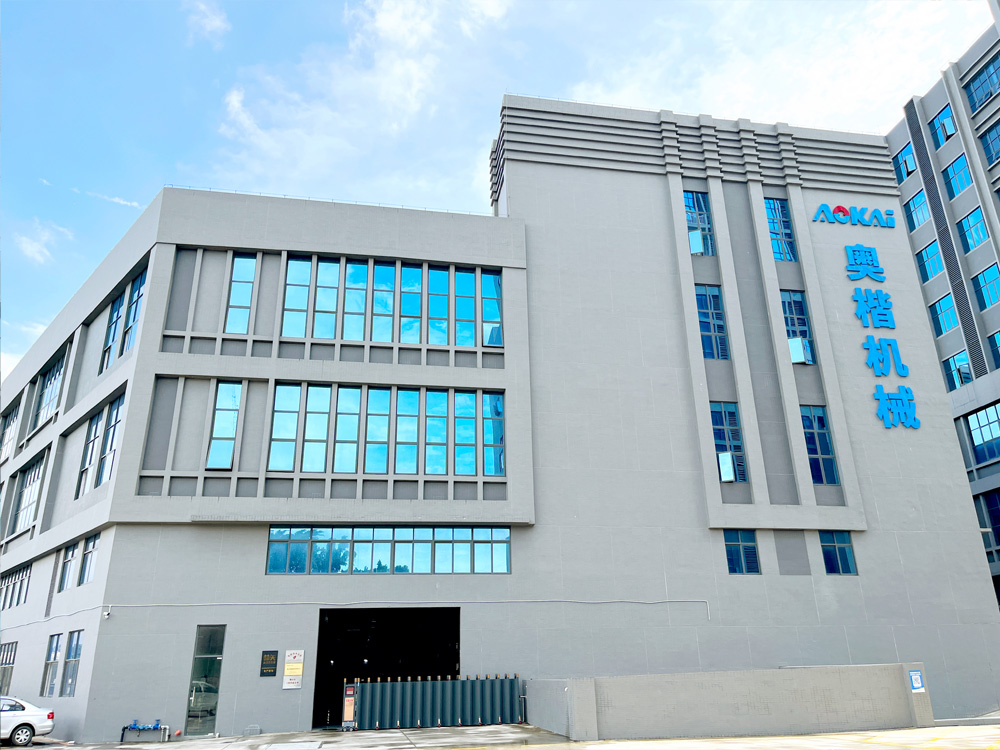
Why Traditional Sausage Production Is Becoming Less Competitive
Many small and medium-sized sausage factories still rely heavily on manual operations or disconnected standalone machines. While this setup may work during early business stages, it often creates operational bottlenecks as demand increases.
Common problems include:
Inconsistent product weight and appearance
Slow material transfer between production stages
High labor dependency
Production interruptions
Increased product waste
Difficult hygiene management
As competition intensifies, factories using traditional systems often struggle to maintain profitability.
This is why automated processing solutions are becoming the preferred choice for modern manufacturers.
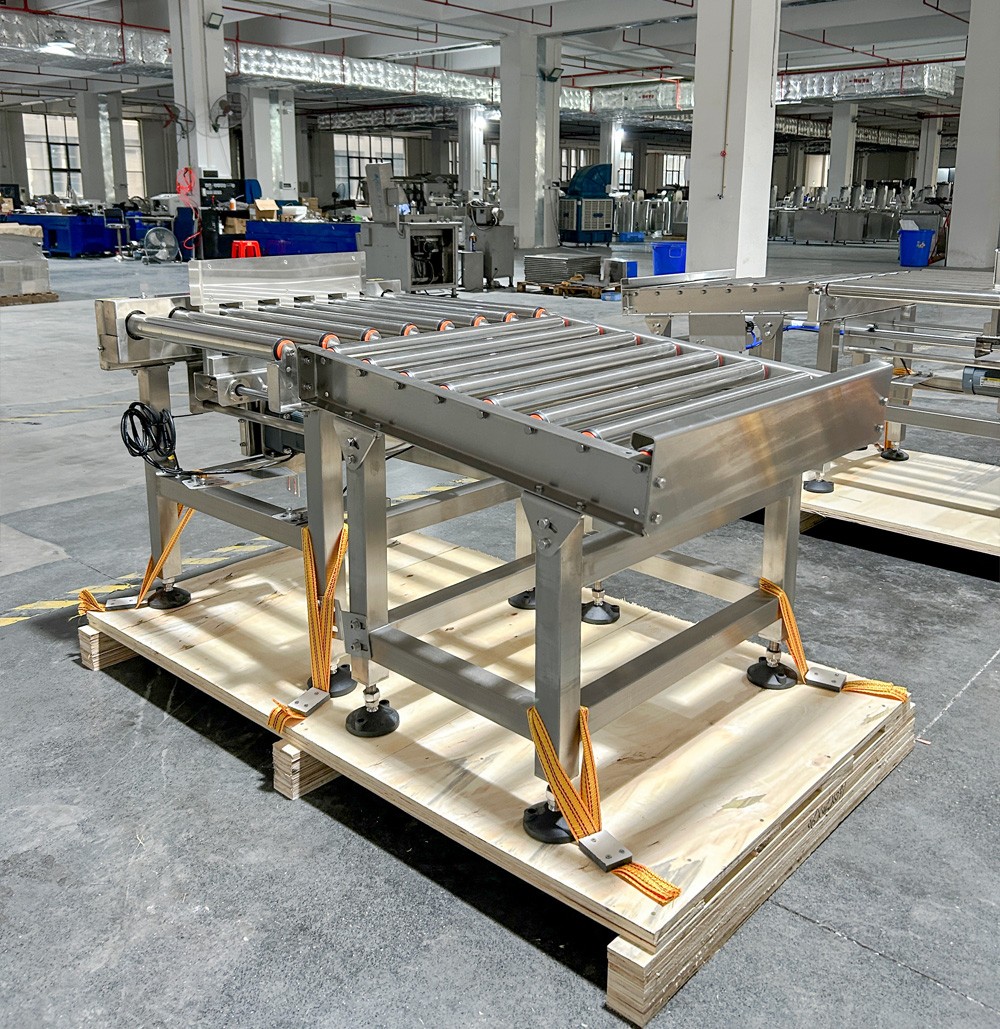
Aokai’s Integrated Automated Sausage Processing Solution
Unlike isolated equipment setups, Aokai’s automated line connects every major production stage into one coordinated workflow.
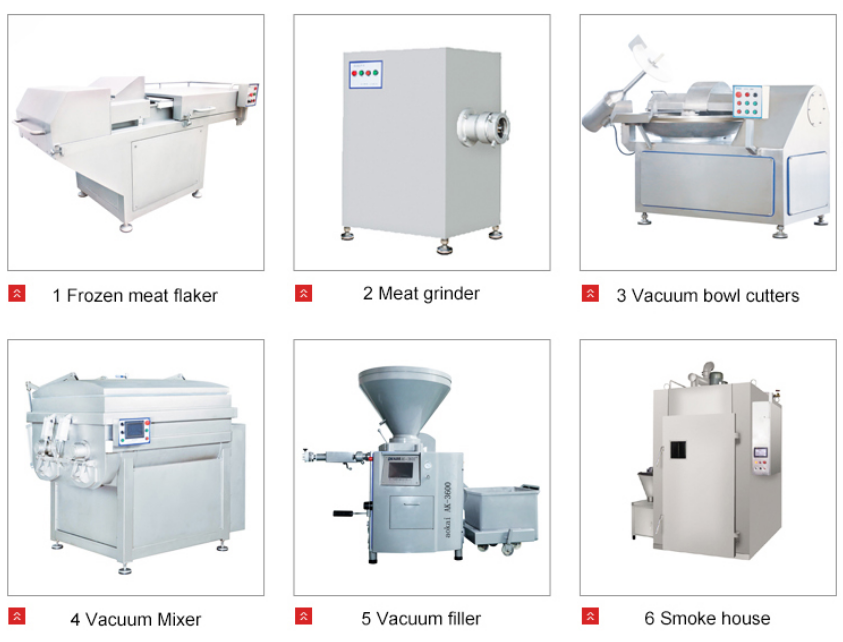
The complete system includes:
Automatic material loading
Meat grinding
Vacuum mixing
Quantitative filling
Automatic tying
Smoking and cooling
Packaging
Each stage is synchronized to reduce manual handling and improve operational continuity.
At the core of the system are several key intelligent machines:
sausage maker machine systems for stable processing
High-precision commercial sausage filler units
Automated sausage filling and tying machine technology
Intelligent sausage threading machine solutions
Reliable sausage binder machine integration
This integrated structure allows factories to maintain high output while improving consistency and hygiene.
Stage 1: Intelligent Meat Preparation Improves Workflow Stability
The automation process begins with raw material handling and grinding.
Traditional factories often rely on manual transportation between machines, which increases labor requirements and slows production speed.
Aokai’s automatic loading and grinding system creates continuous material flow directly into the mixing process.
The advanced sausage maker machine configuration improves:
Grinding consistency
Material transfer speed
Labor efficiency
Raw material utilization
Stable meat preparation is critical because it directly affects downstream filling and product texture.
Stage 2: Vacuum Mixing for Better Texture and Quality
After grinding, the meat enters the vacuum mixing stage.
Vacuum technology removes excess air from the product mixture, improving:
Product density
Texture consistency
Flavor absorption
Shelf-life stability
The intelligent mixing system also supports recipe storage and parameter adjustment, allowing factories to switch products more efficiently.
This is especially important for manufacturers handling multiple sausage varieties in the same facility.
Stage 3: Precision Filling and Automatic Tying
One of the most important efficiency upgrades comes from the filling and tying process.
In traditional factories, filling and tying often require multiple workers. Inconsistent tying strength can also affect product appearance and packaging performance.
Aokai’s integrated commercial sausage filler and sausage filling and tying machine system solves these issues through automated synchronization.
Key advantages include:
Stable filling pressure
Accurate portion control
Consistent product length
Reduced casing breakage
Continuous high-speed operation
The automated sausage binder machine further improves sealing consistency while reducing manual labor requirements.
Stage 4: Intelligent Conveying and Product Transfer
During continuous production, stable product transfer is critical.
Aokai’s automated sausage threading machine ensures smooth sausage movement between processing stages while minimizing product deformation.
Compared with manual transportation, automated conveying systems provide:
Better product appearance
Lower contamination risk
Improved line synchronization
Reduced operator fatigue
This stage is often underestimated, but it has a major impact on overall production stability.
Stage 5: Smoking, Cooling, and Packaging Integration
After filling and tying, products enter the smoking and cooling stages before final packaging.
Automation during this process improves:
Temperature consistency
Product color stability
Cooling efficiency
Packaging speed
Integrated packaging systems also reduce secondary handling and improve hygiene control.
For export-oriented manufacturers, this level of process control is increasingly important for meeting international food safety standards.
Real Case Study: Production Performance Improvement
One medium-sized meat processor upgraded from semi-manual production to Aokai’s automated processing line.
Before Upgrade:
12 operators
800 kg/hour production capacity
Frequent production interruptions
High product variation
After Upgrade:
7 operators
1200 kg/hour capacity
Stable continuous production
Improved product consistency
Final Results:
| Improvement Item | Result |
|---|---|
| Labor reduction | -40% |
| Production increase | +50% |
| Product loss reduction | -3% |
| Production consistency | Significantly improved |
This case clearly demonstrates how intelligent automation improves both operational efficiency and profitability.
Flexible Solutions for Different Factory Sizes
One of Aokai’s key advantages is scalability.
The company provides customized systems suitable for:
Small workshops: 50–500 kg/h
Medium factories: 1–5 t/h
Large industrial lines: 10 t/h+
Whether customers need a compact commercial sausage filler setup or a fully integrated industrial processing line, Aokai can customize the solution according to production goals and budget.
Industry Analysis: Why Automation Is Accelerating Globally
| Industry Trend | Operational Challenge | Automated Solution |
|---|---|---|
| Rising labor costs | High workforce dependency | sausage filling and tying machine |
| Higher hygiene standards | Manual contamination risks | Automated conveying systems |
| Increased production demand | Low output efficiency | Intelligent sausage maker machine |
| Product diversification | Frequent changeovers | Flexible automation control |
| Export market expansion | Consistency requirements | Automated sausage binder machine |
The market trend clearly shows that automation is no longer optional for growing food manufacturers.
Why More Global Manufacturers Choose Aokai
With more than 17 years of manufacturing experience, Aokai specializes in one-stop sausage and meat processing solutions.
The company combines:
Equipment manufacturing
Production line design
Installation support
Technical training
After-sales service
Its systems are widely used in North America, Southeast Asia, Latin America, and other international markets.
Rather than simply selling machines, Aokai focuses on helping customers build sustainable, scalable, and future-ready production systems.
FAQ: Questions Buyers Often Ask
Q1: Is automation suitable for small factories?
Yes. Aokai offers scalable systems suitable for small workshops and industrial factories alike.
Q2: How much labor can automation save?
Depending on production scale, labor costs can often be reduced by 30–50%.
Q3: What machine most affects sausage quality?
The commercial sausage filler and vacuum mixing system play critical roles in product consistency.
Q4: Can the production line support multiple products?
Yes. Flexible control systems allow quick product switching.
Q5: Why is automatic tying important?
The sausage filling and tying machine improves consistency, speed, and product appearance.
Upgrade Your Factory with Intelligent Automation
Modern sausage production requires more than standalone machines. Factories need integrated systems capable of improving efficiency, reducing waste, and adapting to future market demands.
Aokai helps global manufacturers build intelligent processing systems that combine productivity, flexibility, and long-term reliability.
👉 Tell us your production capacity and product type
👉 Aokai will design a customized automated processing solution for your factory
Conclusion
The future of sausage processing belongs to intelligent and integrated production systems. Manufacturers that continue relying on labor-intensive operations may struggle to remain competitive as labor costs rise and market expectations increase.
Through advanced sausage maker machine systems, intelligent commercial sausage filler technology, automated sausage filling and tying machine integration, efficient sausage threading machine conveying, and reliable sausage binder machine solutions, Aokai helps factories achieve measurable operational improvements.
For modern food manufacturers, automation is no longer simply an upgrade — it is the foundation for sustainable growth and competitive advantage.