


As labor costs continue to rise and food manufacturers face increasing pressure to improve efficiency, many sausage producers are discovering that one of the biggest bottlenecks in their production process is not filling, linking, or packaging—it is sausage sorting and feeding.
In traditional production lines, operators often spend hours manually arranging, sorting, screening, and loading sausages before they enter packaging machines. This repetitive work not only increases labor costs but also creates production delays, inconsistent feeding, and unnecessary downtime.
For modern sausage factories seeking higher efficiency and lower operating costs, automated feeding technology has become an essential upgrade.
This is why more manufacturers are investing in an automatic sausage loader that combines automatic arranging, sorting, inspection, and robotic feeding into one intelligent system.
As a professional Sausage Processing Line manufacturer, Aokai has developed an advanced Automatic Single-Channel Sausage Loader specifically designed to eliminate manual handling while maximizing production efficiency.
What Is an Automatic Sausage Loader?
An automatic sausage loader is an intelligent automation system designed to automatically organize, inspect, sort, and feed sausages into packaging machines without manual intervention.
Instead of relying on workers to align products one by one, the system automatically performs:
Sausage arranging
Length detection
Product sorting
Defect rejection
Robotic loading
Continuous feeding
The result is a smoother production process, higher packaging efficiency, and significantly reduced labor requirements.
For manufacturers struggling with unstable product flow, an automatic sausage loader can become one of the most valuable upgrades within the entire processing line.
Why Manual Sorting Creates Production Bottlenecks
Many sausage factories still depend on manual operators to prepare products before packaging.
While this may appear manageable at low production volumes, the disadvantages become increasingly obvious as output grows.
High Labor Costs
Sorting and feeding positions often require multiple operators per shift.
Factories may need workers dedicated solely to:
Product arranging
Length screening
Rejecting defective sausages
Feeding packaging equipment
These repetitive tasks contribute significantly to overall production costs.
Inconsistent Feeding Speed
Manual feeding rarely maintains a constant production rhythm.
Common problems include:
Packaging machine waiting time
Product accumulation
Uneven feeding intervals
Reduced line efficiency
These interruptions directly affect production capacity.
Product Jams and Downtime
Improperly arranged products often cause:
Feeding blockages
Conveyor congestion
Packaging interruptions
Machine stoppages
This is why many processors are searching for reliable anti-jam sausage feeding equipment capable of maintaining continuous operation.
Quality Control Challenges
Manual inspection is often inconsistent.
Workers may overlook:
Length deviations
Product defects
Damaged casings
Irregular products
As quality standards continue to increase globally, automated inspection becomes increasingly important.
How Aokai's Automatic Sausage Loader Solves These Problems
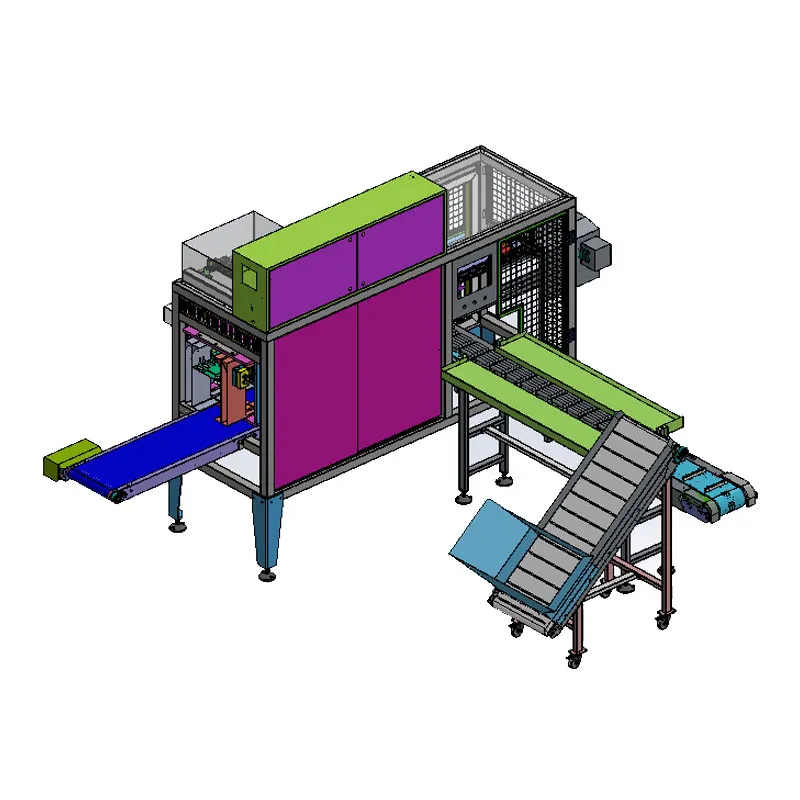
The Aokai Automatic Single-Channel Sausage Loader combines multiple automation functions into one integrated solution.
High-Speed Sausage Arranging
The system utilizes an intelligent centrifugal disc mechanism to rapidly organize randomly distributed sausages.
Unlike traditional conveyors that rely on manual adjustment, the advanced sausage arranging machine automatically aligns products into a stable feeding sequence.
Benefits include:
✓ Continuous product flow
✓ Reduced manual intervention
✓ Faster packaging preparation
✓ Improved line efficiency
This technology significantly improves overall production throughput.
Robotic Automatic Loading
The integrated robotic feeding system automatically transfers products into packaging equipment.
Compared with manual loading, robotic feeding provides:
Consistent speed
Accurate positioning
Reduced operator fatigue
Improved packaging efficiency
Many customers report significant labor reductions after implementing the Aokai automatic sausage loader.
Automatic Length Screening and Defect Rejection
Product consistency is critical for modern packaging operations.
The intelligent detection system automatically identifies:
Incorrect product lengths
Damaged sausages
Irregular products
Defective items
Unqualified products are automatically rejected before entering the packaging stage.
This allows the sausage sorting feeding machine to maintain stable packaging quality while reducing customer complaints.
Anti-Jam Feeding Design
One of the most common causes of downtime is product blockage.
The Aokai system incorporates advanced flow control technology designed specifically as anti-jam sausage feeding equipment.
The system continuously monitors product movement and optimizes feeding speed to prevent:
Product accumulation
Feeding interruptions
Conveyor congestion
Packaging machine stoppages
The result is smoother production and improved equipment utilization.
Full Washable Hygienic Design
Food safety requirements continue to become more demanding worldwide.
The Aokai sausage arranging machine is constructed using:
304 food-grade stainless steel
High-strength alloy components
Water-resistant electrical protection
Fully washable structure
The hygienic design supports easier cleaning and compliance with modern food safety standards.
Industry Application Solutions
Fresh Sausage Packaging Lines
Fresh sausages require gentle handling and precise alignment.
The Aokai sausage sorting feeding machine ensures products enter packaging machines smoothly without deformation.
Benefits include:
Improved packaging appearance
Reduced product damage
Higher packaging speed
Smoked Sausage Production
Smoked sausages often vary slightly in size and shape.
The automatic screening function helps remove non-conforming products before packaging.
This improves consistency and final product presentation.
Breakfast Sausage Processing
High-volume breakfast sausage production demands continuous operation.
The automatic sausage loader supports uninterrupted feeding for maximum packaging efficiency.
Protein Casing Sausage Packaging
Products with protein casings require stable handling to avoid breakage.
The intelligent feeding system minimizes impact and maintains product integrity.
Fully Automated Sausage Factories
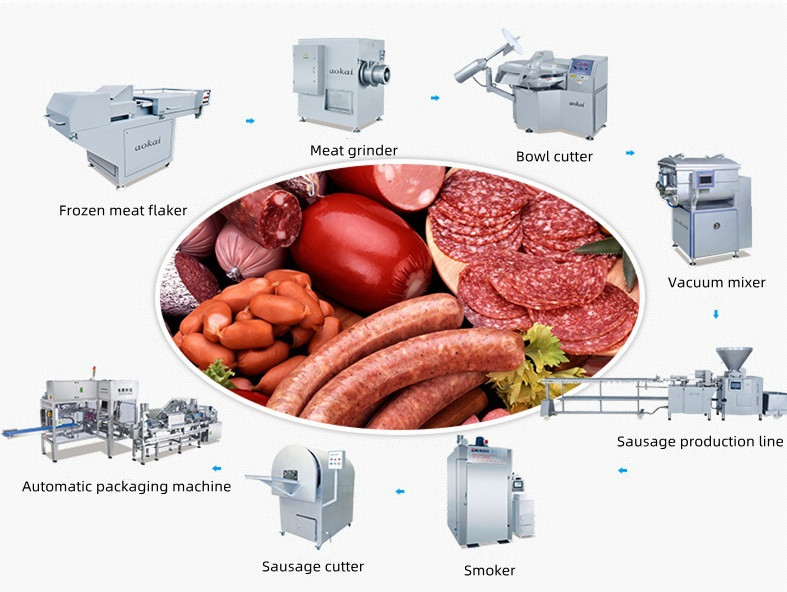
Large-scale processors increasingly integrate the Aokai loader with:
Filling systems
Linking machines
Conveying equipment
Packaging machines
Cartoning systems
This creates a complete automated production environment with minimal manual intervention.
Technical Parameters Overview
| Item | Specification |
|---|---|
| Machine Type | Automatic Single-Channel Sausage Loader |
| Function | Arranging, Sorting, Screening, Feeding |
| Feeding Method | Robotic Automatic Loading |
| Inspection Function | Length Detection & Defect Rejection |
| Arranging System | Centrifugal Disc Technology |
| Material | 304 Stainless Steel + Alloy |
| Cleaning Method | Full Water Washable |
| Compatibility | Custom Fit for Packaging Machines |
| Control System | Intelligent PLC Control |
| Customization | Available |
Procurement Questions Buyers Frequently Ask
How much labor can an automatic sausage loader save?
Depending on production volume, many factories reduce sorting and feeding labor by 50–80%.
The robotic loading system eliminates multiple manual positions.
Can the machine work with existing packaging equipment?
Yes.
The system is designed to be customized according to the customer's packaging machine specifications.
How does automatic length screening improve efficiency?
By automatically rejecting incorrect products before packaging, manufacturers reduce rework, waste, and customer complaints.
What makes this anti-jam sausage feeding equipment different?
The intelligent flow control system continuously manages product movement, significantly reducing blockage-related downtime.
Is the machine suitable for different sausage types?
Absolutely.
The system supports:
Fresh sausages
Smoked sausages
Breakfast sausages
Protein casing sausages
Specialty sausage products
Why Global Manufacturers Trust Aokai
As an experienced Sausage Processing Line manufacturer, Aokai provides more than standalone equipment.
We offer:
Complete sausage processing solutions
Customized production line design
Packaging integration support
Installation and commissioning
Technical training
Spare parts support
Long-term after-sales service
Our goal is to help manufacturers achieve higher productivity while reducing operational complexity.
The Business Value of Automation
Investing in an automatic sausage loader creates measurable operational benefits:
Reduced labor costs
Increased packaging efficiency
Improved product consistency
Reduced downtime
Better food safety compliance
Faster production throughput
Higher overall equipment effectiveness
For many sausage processors, automation delivers one of the fastest returns on investment within the packaging process.
Contact Aokai for a Customized Solution
Every production line has unique requirements.
Whether you are upgrading an existing packaging line or building a fully automated sausage factory, Aokai can provide a customized solution.
Custom service available.
WhatsApp: +44 7835782930
E-mail: info@fsaokai.com
Website: https://www.aokaimachine.com
Tell us your sausage type, packaging speed, and production capacity, and our engineers will recommend the most suitable automatic loading solution.
Conclusion
Manual sorting and feeding have become major obstacles to efficiency in modern sausage production.
By integrating automatic arranging, intelligent screening, robotic loading, and anti-jam feeding technology, the Aokai automatic sausage loader helps manufacturers eliminate bottlenecks and improve productivity.
For processors seeking a reliable sausage sorting feeding machine, advanced sausage arranging machine, and dependable anti-jam sausage feeding equipment, Aokai provides the expertise, technology, and customization support needed to build a more efficient and profitable production line.