


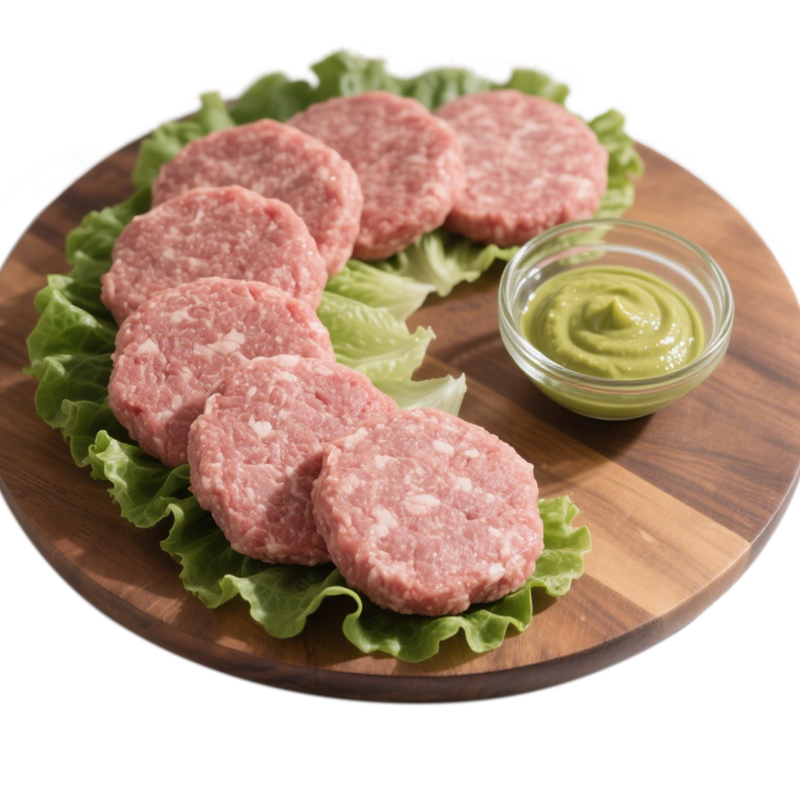


01 Meat grinder
The function of a meat grinder is to cut large pieces of meat into small ones. Its principle involves the screw conveying the meat material, which is propelled forward by the grinder cage with regular guiding ribs, and then extruded through the perforated plate, where it is cut into particles by the rotating grinder blade. The perforated plate comes in standard and custom-made configurations, with the smallest hole diameter generally being 3mm and the largest 32mm. Although a meat grinder may seem simple, it is not easy to produce one with excellent performance. The concentricity and guiding ribs of the grinder cage are the most important factors. The key indicator to measure the performance of a meat grinder is the temperature difference between the meat temperature before grinding and after grinding. The smaller the temperature difference, the better the performance of the meat grinder. Generally speaking, it is reasonable to control the temperature difference within 2℃.
Some meat grinders are equipped with a separation device to separate connective tissues such as muscles and tendons. Such meat grinders are called de-tenderizing meat grinders. Due to process requirements, some manufacturers regard them as the most important equipment. A good meat grinder should produce meat with clearly defined particles, even some fat can be ground into distinct particles. Clearly defined particles indicate that the meat particles have suffered less damage, which means that the meat grinder has better processing efficiency.
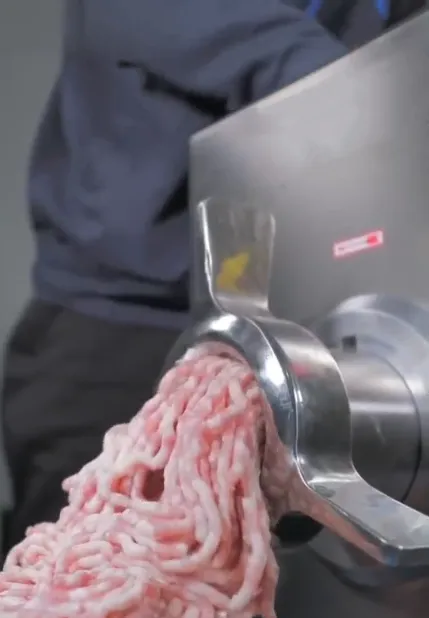
02 Chopping and mixing machine
The chopping machine is the most crucial equipment for extracting salt-soluble protein from sausage slurry and diced ingredients. Its function is to quickly extract protein and form a gel with the water in the raw materials at 2-8℃, creating a viscous emulsion. This principle is achieved through six knives mounted on a high-speed rotating shaft, which chop the meat ingredients at high speed in a variable-speed disc pot. Its ability to extract salt-soluble protein is unmatched by other equipment, with a good chopping machine achieving up to 68% extraction efficiency.
The chopping machine is not only limited to the aforementioned functions; it is also a master at reducing product costs and enhancing product flavor. It is no exaggeration to describe it as the core equipment for meat product processing. It can emulsify pig skin, chicken skin, and minced meat at high speed, which cannot be achieved with a meat grinder. For example, adding chicken skin emulsions to the production of Taiwanese roast sausages can not only reduce costs but also enhance the flavor of the product.
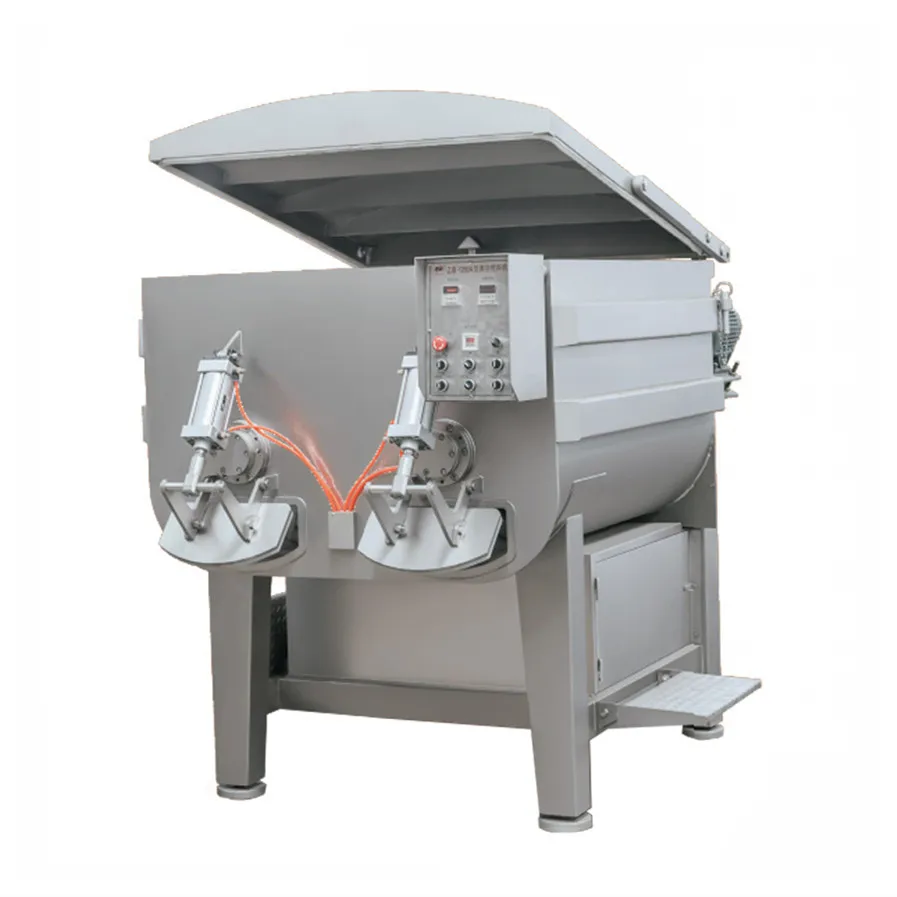
03 Mixer (Blender)
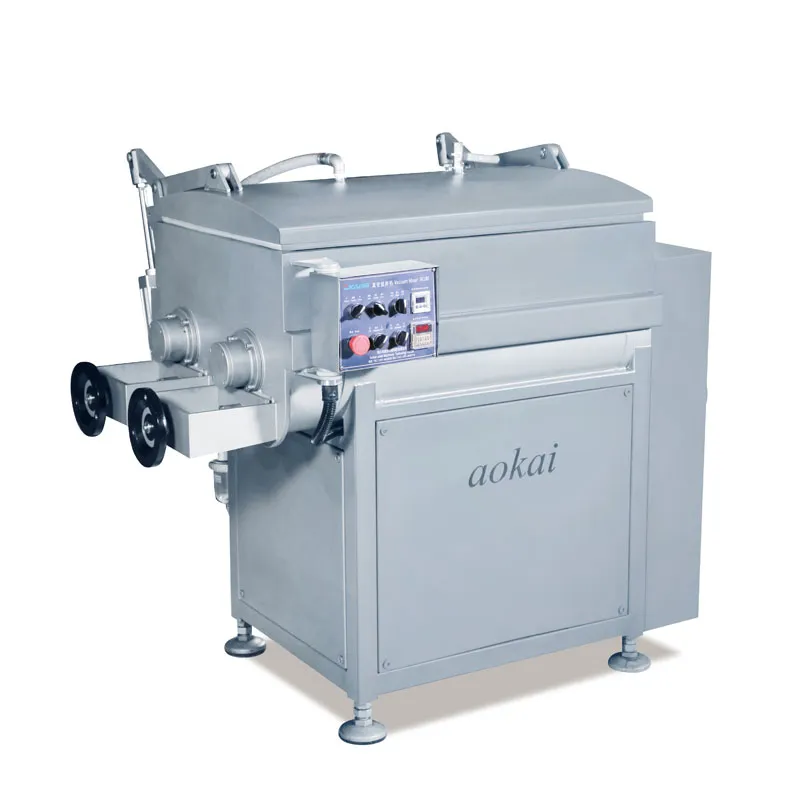
The blender is a simple and traditional equipment, whose main function is to mix and blend finely ground raw materials with auxiliary materials and water to achieve homogeneity for use in the next process. Although blenders are simple, they are the most important equipment for certain products, especially for traditional products. To ensure the flavor, structure, and texture of these products, blenders are indispensable. For products that have been passed down for decades, such as Harbin red sausage, Shanghai red sausage, and Merlin luncheon meat, using equipment like chopping mixers for emulsification would result in strange products. Therefore, changing the traditional process used in traditional products easily may have negative effects.
There are three common types of mixers.
(1) Following the technology of the former Soviet Union, it adopts a double worm gear shaft type, allowing the meat material to tumble in the container under vacuum conditions, achieving homogenization of the meat pulp.
(2) Imitating Danish products, the mixing shaft is equipped with several pairs of slightly inclined blades. When mixing, it is similar to fingers stirring inside, allowing for forward, reverse, and opposite stirring. It can also be programmed and controlled using PLC, achieving homogenization of the material slurry under vacuum conditions after the mixing process.
(3) Similar to a dough mixer, several slightly inclined flat bars are welded to the mixing shaft. This structure is simple, but prone to dead zones, and is less commonly used in meat processing enterprises.
04、 Rolling and kneading machine
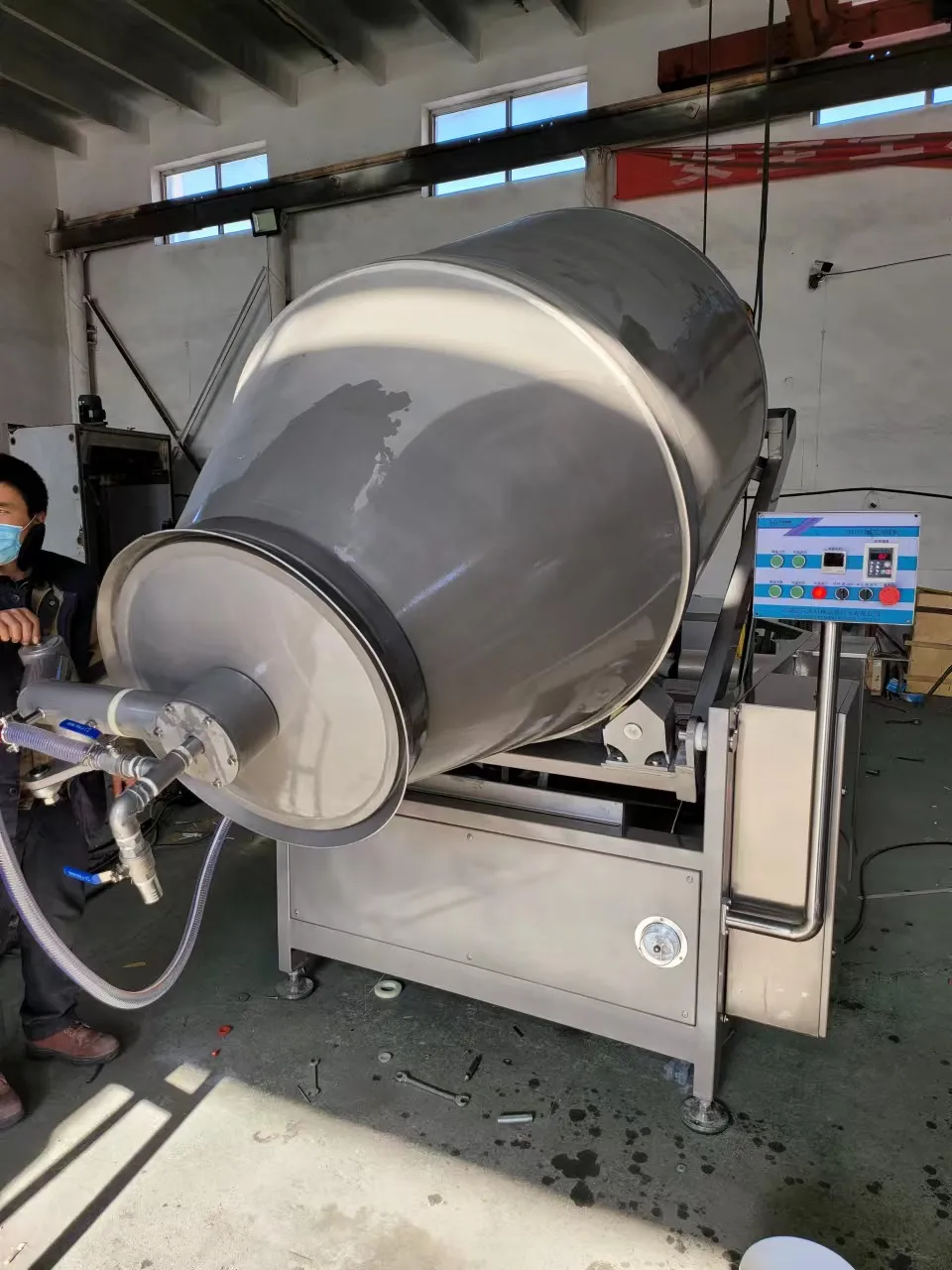
The tumbling roller is used for producing large-piece meat hams, but it is also widely used in the production of granular sausages. Its main function is to achieve the effect of extracting salt-soluble proteins by allowing the slurry to fall up and down when the tumbling roller rotates at low speed in the tumbling barrel.
The process of using a tumbling machine is essentially a marination process for meat-based ingredients. However, by utilizing a tumbling machine, the static marination time can be significantly reduced. Therefore, we can also refer to the tumbling process of the tumbling machine as a dynamic marination process for meat ingredients. Due to the vacuum condition of the tumbling machine, the meat tissue expands within the container, allowing saltwater, water, flavorings, and other ingredients to penetrate more evenly and rapidly into the meat filling, thus achieving a rapid marination effect.
There are both vacuum and non-vacuum rolling machines. The non-vacuum rolling machine, also known as a massage machine, features a square barrel and planetary massage paddles that gently massage the meat pieces to extract protein. It excels in making high-end roasted tenderloin, smoked salted whole meat ham, and steamed salted square ham.
Vacuum rollers come in various models and designs, but their fundamental mechanisms fall into two categories: one involves welding rollers onto the barrel wall, such as the commonly seen hydraulic split-type 750 roller; the other involves welding a baffle inside the barrel to reverse the discharge, as seen in breathing-type 1500 or 2500 rollers.
05 Filling machine
Filling machines can be divided into two major categories.
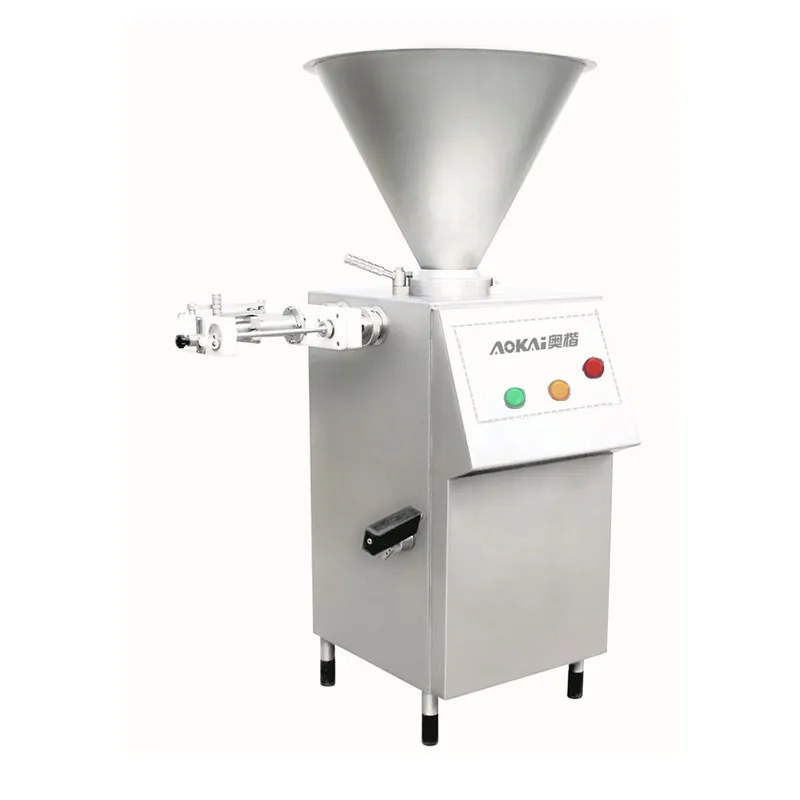
One type is defined as a positive pressure sausage filler. This type of sausage filler does not require vacuum and has the simplest structure. In a closed material bucket with a diameter of 250-400mm, the meat material is pushed out through the sausage filling tube by a piston. Its main driving forces are hydraulic and pneumatic. Generally, hydraulic pressure is the main driving force because it is relatively stable. With the development of electronic technology and computer industrial control technology, this once most primitive plunger-type sausage filler can now also be fully automated, and it has various functions such as quantitative filling, continuous automatic twisting, punching, and tying. This type of sausage filler is very suitable for producing Chinese-style sausages.
Another type is defined as a negative pressure sausage filler. This type of sausage filler invariably adopts an open funnel design. The meat material enters the meat pump through the negative pressure generated by vacuum in the funnel and the spiral rotating device inside the funnel, and is pumped out from the filling tube by the rotation of the meat pump. This type of sausage filler has become the mainstream equipment used by various manufacturers. Its advantage is that it enables continuous and controllable processing during the filling and sealing process, is suitable for automated configuration, and is easy to increase production.
There are many varieties of vacuum sausage fillers, including blade-type, twin-screw-type, and gear-type. Let's focus on the blade-type vacuum sausage filler. Analyzing from the trajectory of the blades, we mainly see two types. One is represented by the German Handman, where the blades move in a plane and change the volume between them through a cam, generating pressure to push the meat material out and fill it into the casing. The other type is represented by the Italian Resco, where the blades move up and down in a wave-like manner along the trajectory at the bottom of the meat pump, changing the volume within the blades and generating pressure to push the meat material out of the filling tube and into the casing.
Regardless of the type of pump, it operates based on volumetric quantification. Its main structural principle consists of three areas: the feeding area, the portioning area, and the vacuum area. However, it is precisely in these three areas where the curves of the meat pump stator are extremely complex.
06 Aluminum buckle ligation machine
The aluminum buckle ligation machine is primarily used for sealing large-diameter, thick-walled casings, including nylon casings, fiber casings, fiber-coated casings, and non-edible large-diameter collagen casings.
There are three types of aluminum buckle tying machines. (1) U-shaped buckle tying machine. There are three types: manual, semi-automatic, and fully automatic. Depending on the size and hardness of the casing, there are various sizes of buckles. The manual buckle tying machine makes single buckles, while the semi-automatic and fully automatic buckle tying machines make double buckles, generally used for tying hams and sausages with smaller casings. (2) Aluminum wire tying machine. This equipment is not the most widely used and is mainly used for tying small-diameter sausages filled with nylon casings, such as the popular grilled sausages on the market and some ham sausages filled with tubular PVDC film used by small units. A few years ago, this tying machine achieved massive sales in China. (3) Great Wall buckle tying machine. This model is mostly fully automatic. Due to its outstanding sealing performance, it is known as the lifesaving buckle in ham processing. Hams made with this tying machine have a longer shelf life.
07 Kink system
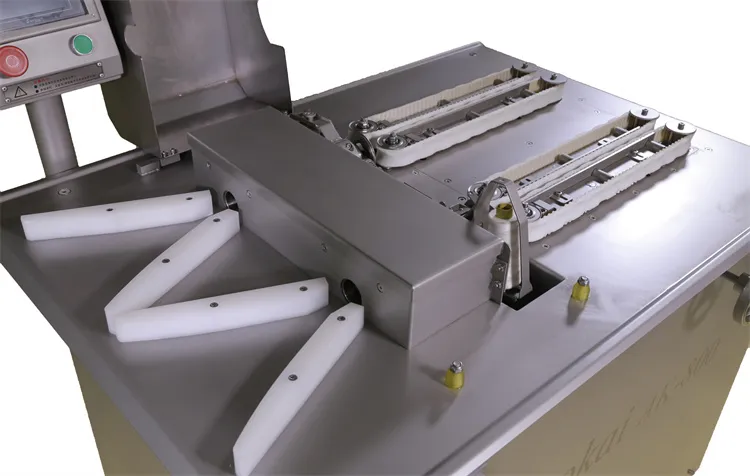
Many small-diameter sausages are sealed and portioned using twists in the casing itself. The primary reason for using twists for portioning is its high-speed and efficient twisting. Twists can be broadly categorized into three types.
(1) Twister + gripper. This is currently the most common type, and five years ago, this type of equipment was the mainstream choice for meat processing plants. However, this twister is actually a conceptual twisting method, an additional functional device added to the sausage filler, similar to the device installed on the filling machine for making rice-meat dumplings or hamburger patties. Since this device operates in a pulsating manner, the smaller the particles, the faster the pulsation, resulting in a higher rate of equipment damage. Components such as the timing belts, damping rings, and connecting fine gears on the twisting and gripping devices have high maintenance costs. After a period of use, errors gradually increase, leading to variations in length.
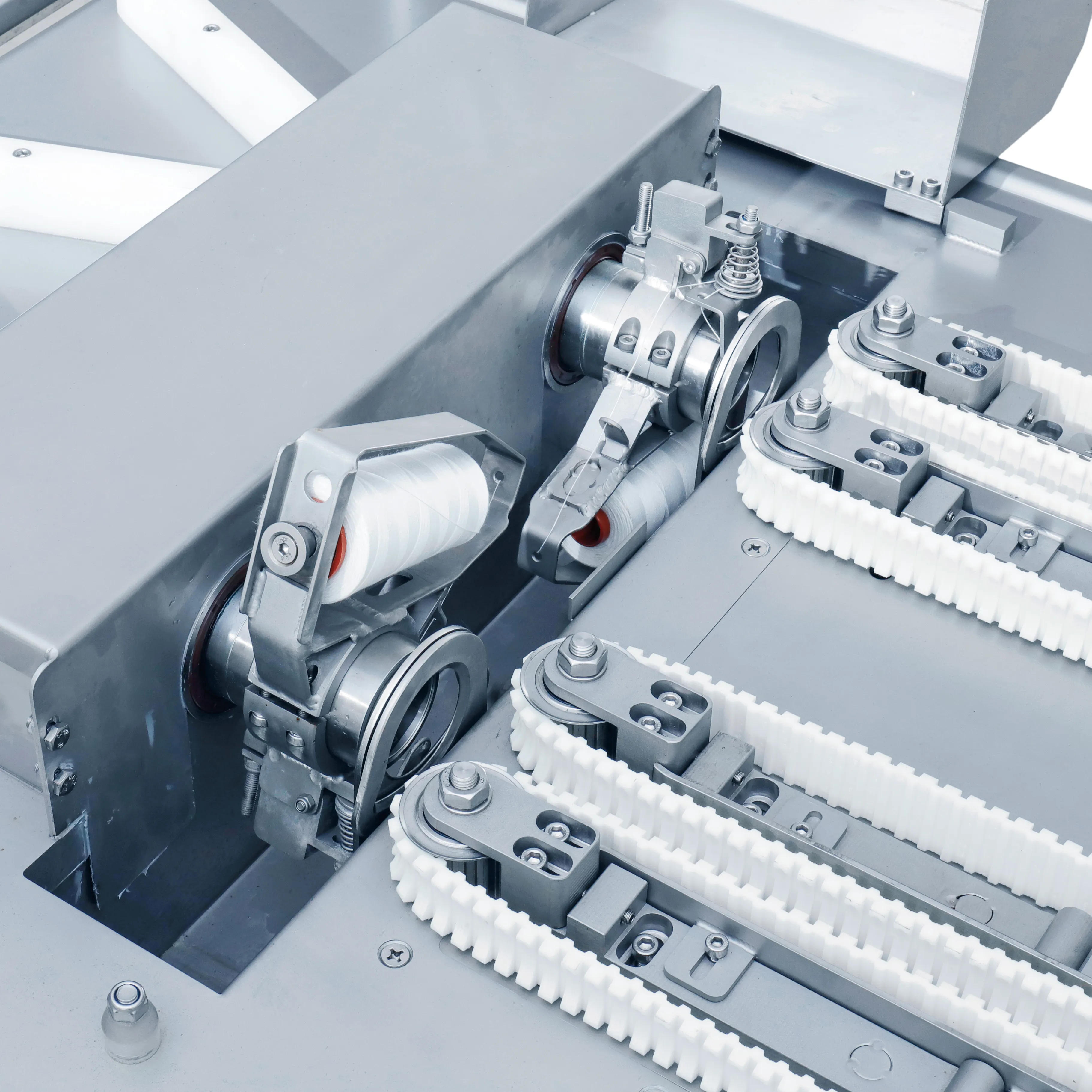
(2) Butterfly knot type. This type of twisting knot features continuous rotation of the twisting device and the butterfly knot device, with the latter serving as a pressure-regulating mechanism. The advantage of this structure is its ability to twist at high speed. Depending on the strength of the casing, it can twist 650 to 2000 knots per minute, and the size of the particles is controlled by the speed of the butterfly knot device. The faster the speed, the smaller the particles. However, due to the high-speed operation, the front guiding and pulling conveyor belt is prone to fatigue and damage, and the price of this conveyor belt is very expensive, at around 6,000 yuan per unit.
(3) Pressure-type knot tying system. There are also two methods: one is the conveyor belt type, and the other is the turntable type. The conveyor belt system structure first appeared on the sausage filling machines of Townsend hot dogs in the United States and Heidecker hot dogs in Japan. The pressure-type knotting pieces on the conveyor belt are made of stainless steel. Its advantage is that the sausages produced are more consistent in length and weight. However, it can only be used on high-strength cellulose casings, and for collagen casings, it is prone to damage during knot tying.
8、Wire tying machine
Due to the improvement of wire tying machine technology, it has become the mainstream equipment in sausage processing in China in recent years, with outstanding advantages: saving sausage casings, depending on the specifications, it can save about 350-1200 tons of sausage casing costs; saving labor, wire tying machines seem not as fast as twisting machines, with 200-240 pieces per minute, equivalent to the speed of twisting machines in the 1990s. However, due to its continuous operation and no time for changing sausage casings in between, the hourly output is not low. More importantly, it has a wire cutting function, which is equivalent to more than 5 workers manually cutting twisted sausages, even exceeding the speed of the world's fastest sausage cutting machine.
09 Smoking and Steaming System
Most factories engaged in meat processing are equipped with automated smoking and cooking systems, whose time, temperature, and humidity are precisely controlled by computers. The smoking box has two door single car and multi car systems, and can be selected reasonably according to the needs of the manufacturer.
There are roughly two ways to supply heat to a smoking box.
(1) Steam. Most of the heat sources for smoking boxes are provided by steam, and each smoking box needs to have two pipes with different pressures connected. One is used to meet the drying and dry smoking processes, and its pressure should reach 0.6-0.8 MPa; The other one directly leads to the smoking chamber and sprays relatively low-pressure steam. The steam pressure during cooking should not exceed 0.1 MPa. For some collagen casings with thin skin and good texture, they are sensitive to steam pressure. The steam pressure during cooking should be lower than 0.07 MPa, otherwise the sausage is prone to bursting.
There are two common heating systems for smoking boxes. One is to install coils at the top of the smoking box, with each coil corresponding to a smoking and cooking rack below. For example, a two F1 four car smoking box has four heating coils at the top and four cooking racks below. There is also a heating system that uses a type similar to an evaporator, which integrates many coils into a whole. This form of heating system is easy to disassemble and extract, and heats up quickly during heating. The disadvantage is that the production cost is high.
(2) Electricity. If the factory is built not far from the city center, boilers, especially those using coal, are not allowed to be used, so an all electric smoke box is a good choice. The top of the all electric smoke box is equipped with an electric heating tube. Due to the fast and high heating requirements of the smoke box, the power requirement is very high. Generally, the power of each unit is around 25kw, and one unit corresponds to one steam truck. For example, a smoking box with two doors and two trucks requires a heating power of about 50kw.
The fully electric smoking box does not have an independent steam supply system. The steam is generated by a nozzle connected to tap water with a certain pressure. The water mist generated by tap water is sprayed onto an electric heating tube at around 400%, quickly producing hot steam to achieve 100% humidity in the smoking box, in order to achieve the purpose of steaming and boiling the product.
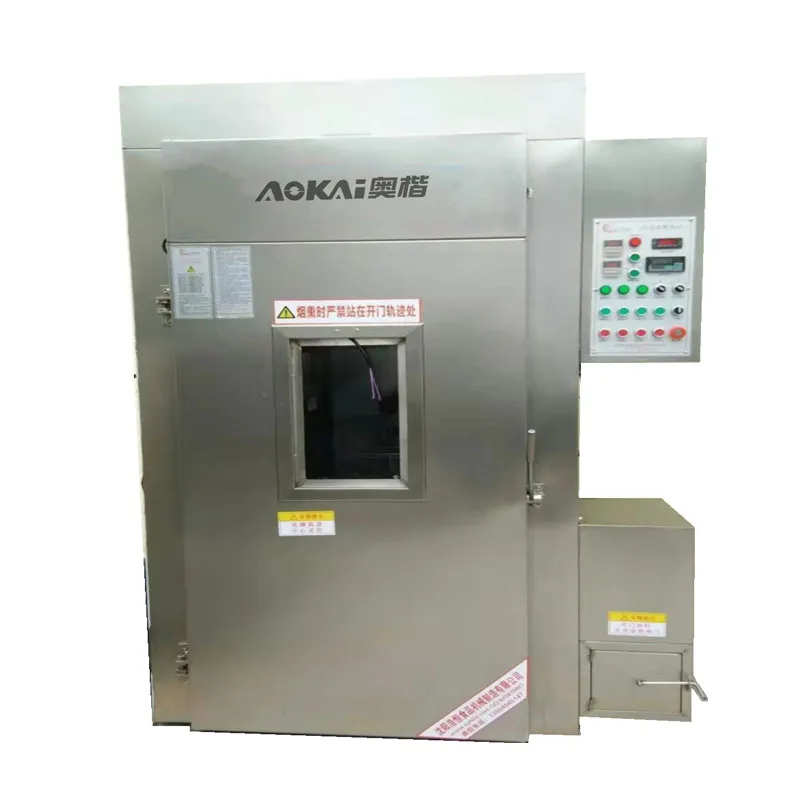
Although the smoking box involves thermodynamics and fluid mechanics in theory, its structure is very simple. Without going into detail, let's introduce how to smoke.
(1) Wood particle smoke generator. This type of generator involves placing wood pellets onto a strongly heated iron plate for smoldering, generating smoke that is then directed into a smoking box through a fan.
(2) Steam smoke generator. In the smoke generator, water vapor is heated to an ultra-high temperature of 350-400 ℃, and then through thin wood chips, low or high-intensity smoke is generated at a set temperature. Both water vapor and smoke enter the smoking box at the same time.
(3) Wooden block friction smoke generator. This type of smoke generator is mainly used in European and American countries. It uses a standard length and cross-sectional area wooden block, and generates smoke by rotating a metal turntable inside the smoke generator and rubbing the wooden block. This type of smoke generator is installed on the front door of the smoking box. Although it works well, the cost is extremely high, and the wooden strips that meet this standard are all imported. Only a few manufacturers in China are using it.
(4) Liquid fumigation generator. There are approximately two ways of liquid smoking. One is the spraying method, in which the sausage with a hanging rod is treated by a specialized machine - the smoking liquid rod spray machine for showering. After this treatment, the product can be directly dried without the need for additional smoking process. The color depth and smoking flavor of the product are more determined by the concentration of the smoking liquid; The other is the fumigation liquid spray. The concentrated fumigation solution passes through a special generator to produce heavy smoke and diffuse it to the fumigation box. The diffusion process of this smoke is intermittent, and the fan will stop running for a period of time during the diffusion process of the smoke released by the generator. Liquid fumigation is the most hygienic, and it is also convenient for coloring and flavoring.
10、 packaging machine
(1) Conventional sealing machine. The simplest sealing machine is electrically heated by foot or hand pressure. The heating device is like a clamp, and the upper and lower heating wires are attached with high-temperature tape. A slightly advanced one is the belt sealing machine, which implements a flowing sealing process. This type of sealing packaging machine is mainly used for non vacuum conventional packaging.
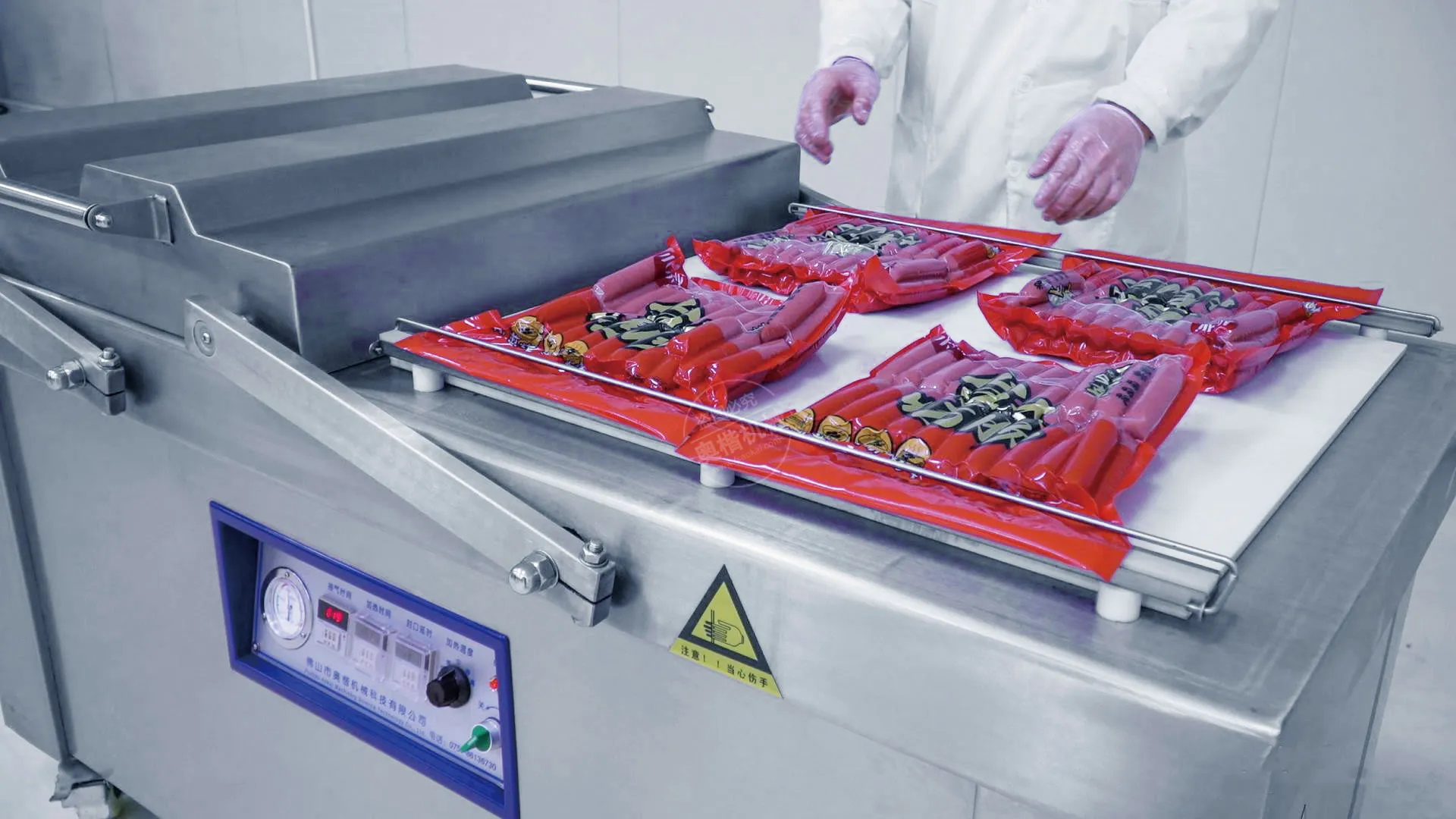
(2) Box type vacuum packaging machine. There are two types of chambers: single chamber and double chamber. Most of them are double chamber because of their high efficiency. Often, one chamber is evacuated while the other is placed. The quality of this packaging machine is mainly reflected in the performance of the vacuum pump, but there are also requirements for control, which can be divided into continuous vacuum pumping and pulsating vacuum pumping. This packaging machine is used for composite plastic bags that can be sealed.
(3) Upper and lower film packaging machine. The complete name of this packaging machine should be "Upper and Lower Film Tray Roll Vacuum Packaging Machine" or "Continuous Vacuum Stretch Packaging Machine". The material used is upper and lower roll film, with the upper film being thinner and the lower film being thicker, and the lower film being slightly wider than the upper film. The machine has a complete range of functions, including heating and forming, vacuum sealing, automatic forward movement, automatic cutting, automatic labeling, automatic date printing, automatic punching, and more.
(4) Modified atmosphere fresh-keeping packaging machine. It achieves the preservation and extension of food by utilizing various gases such as CO2, 02, 03, N2, etc. in different proportions.
11、Sorting and Sorting Machine
Its main function is to sort out sausages that do not meet packaging specifications, automatically arrange products of almost the same length according to a set number, and then automatically place them into the pre made trays of the stretching vacuum packaging machine.
12、 secondary sterilization line
This machine consists of a hot water tank, a cold water tank, a coolant, a wind dryer, a continuous conveyor belt, and an electronic control part. It mainly solves the problem of secondary pollution through secondary sterilization and increases the shelf life of the product.
13 inkjet printer
Marking the production date or barcode on packaged products is mainly suitable for simple ordinary sealing packaging and the later process of cavity vacuum packaging machines, and continuous vacuum stretching packaging machines already have this function.