
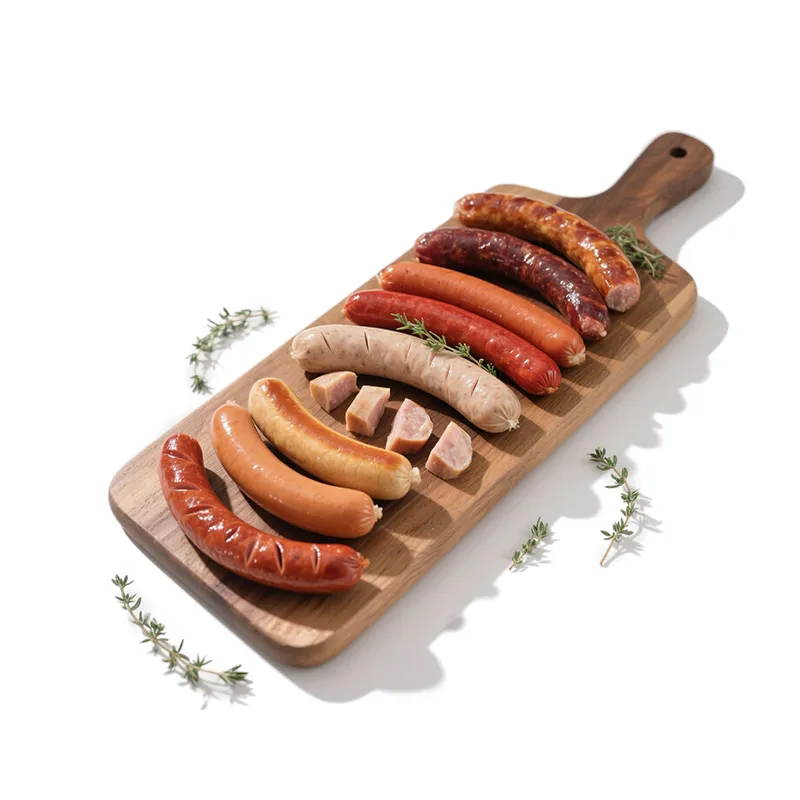
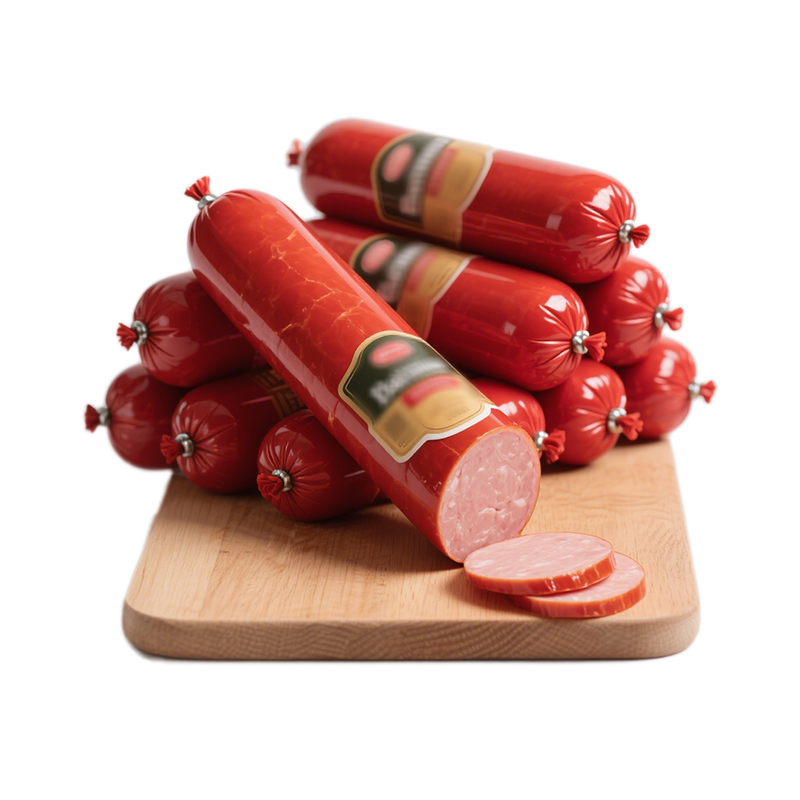
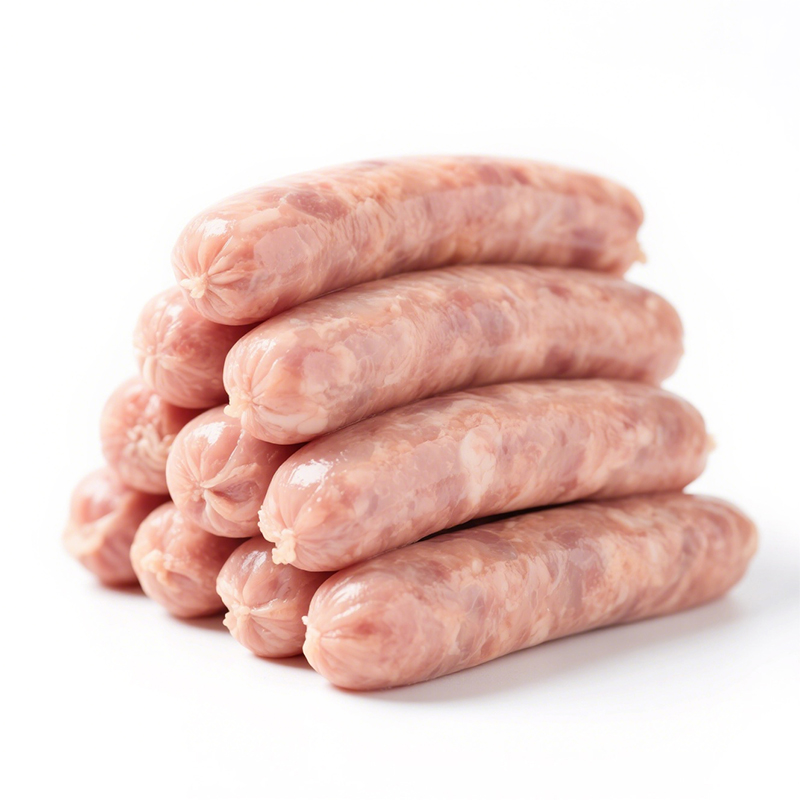

Production Process of Shiitake Mushroom Emulsified Sausage
Shiitake mushrooms are rich in protein, fat, vitamins, nicotinic acid, calcium, phosphorus, iron and other nutrients. Their nutritional value is four times that of beef, and they are known as "meat among vegetables". Shiitake mushrooms are rich in glutamic acid and rare amino acids such as lentinan, orthosine and ergotamine, which are particularly delicious and loved by people.
1.1 Process Route
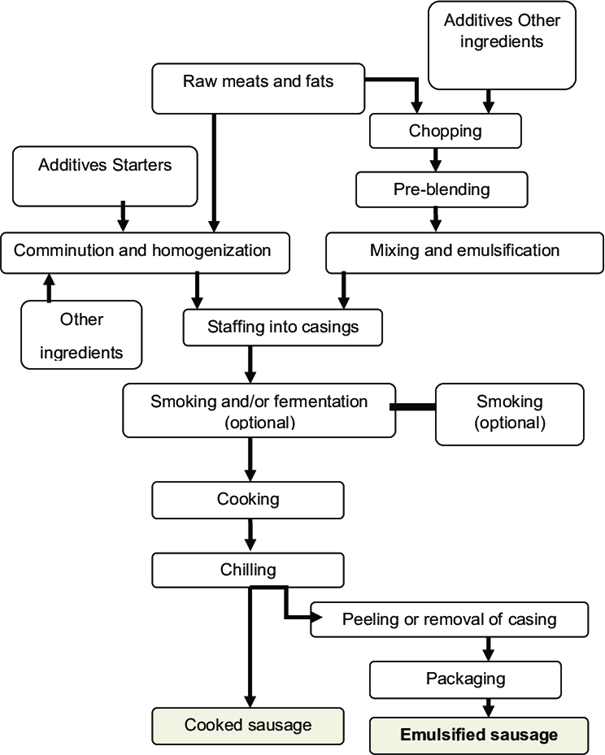
1.2 Key Points of Operation
(1) Raw Material Pretreatment: Select fresh shiitake mushrooms with thick flesh and intact caps. After washing, blanch them in hot water for 5 minutes, then drain and cool them to make a paste for later use. After removing tendons, blood vessels, skin, bones and lymph nodes from pork hind leg meat, cut it into thin slices, add shiitake mushroom paste and auxiliary materials, chop and mix in a chopper, and add an appropriate amount of ice chips to control the raw material temperature to be less than 10℃.
(2) Stuffing: Quickly transfer the mixed filling into a sausage stuffer and stuff the sausages under vacuum conditions. Each section should be 12-15cm long and moderately tight.
(3) Baking: The oven temperature is controlled at around 120℃ for about 60 minutes. Baking is complete when the sausage surface is dry, the casing is semi-transparent, and the filling color is partially or completely visible.
(4) Cooling: After baking, the sausage is cooled to obtain the finished product, which is then stored in a cold storage at 0~4℃.
1.3 Raw Material Addition Amount: 100 g of pork hind leg meat (lean-to-fat ratio 2:8), 5 g of potato starch, 2.8 g of auxiliary materials (0.4 g of compound phosphate, 1.5 g of salt, 0.5 g of spices, 0.1 g of ginger powder, 0.3 g of MSG), 15 g of shiitake mushroom paste, and 5% ice added during chopping and mixing.
QQ Sausage Production Process

QQ Sausage is a Western-style sausage product made primarily from pork and chicken, supplemented with fillers such as starch and plant protein, and then seasoned with spices, quality improvers, and water and oil retainers. It is produced through tumbling and chopping, followed by filling and sterilization. Although this product belongs to the mid-to-low-end sausage category, it is nutritious, has a unique flavor, is inexpensive, convenient to eat, and boasts novel packaging and appearance, along with a highly creative product name.
1.1 QQ Sausage Formula
Due to the special production process, the emulsified sausage formula is divided into two parts: tumbling material A and chopping material B. Specific parameters are shown in Tables 1 and 2.
1.2 QQ Sausage Production Process
1.3 Key Points of QQ Sausage Production Operation
(1) Raw Material Selection: Fresh chicken leg meat, fat, and chicken skin are thawed at temperatures below 15℃. The thawing time for frozen meat is generally 12-18 hours, and the meat temperature after thawing should not exceed 7℃.
(2) Chicken leg meat is ground using an 8mm perforated plate, while fat and chicken skin are ground using a 3mm perforated plate.
(3) The ground chicken leg meat is put into a tumbler, and tumble material A is added. Tumble for 3 hours under a vacuum pressure of 0.09MPa, with 30 minutes of tumbling followed by 10 minutes of rest. The raw material temperature is controlled at around 4℃, and the room temperature is controlled at 4-8℃.
(4) The ground fat and chicken skin are put into a chopper, and soy protein isolate and 1/3 ice water are added. First, chop and mix at low speed until well mixed, then chop at high speed until there are no skin oil particles. Add starch and 1/3 ice water and chop evenly at high speed. Finally, add the remaining chopping material B and 1/3 ice water and chop at high speed until fully emulsified and evenly mixed. The temperature during chopping should not exceed 10℃. This process is the starch emulsification technology.
(5) Put the chopped emulsion into a tumbler and tumble it for 2 hours under a vacuum pressure of 0.09 MPa, with a 30-minute tumble interval of 10 minutes. The room temperature should be controlled at 4-8℃.
(6) Soak the nylon casings in tap water for 30 minutes. Fill and pack the sausages under vacuum conditions. Each finished product should weigh 100g. The filling temperature should be below 13℃.
(7) Clean the surface of the sausage and the meat residue at the buckle to prevent spoilage.
(8) Put the sausages into a sterilization device and slowly heat them to 90℃. Start timing and keep the temperature for 60 minutes. Cool them to room temperature with cooling water.
(9) After cooling to room temperature for 24 hours, keep them at 90℃ for another 40 minutes and then quickly cool them to room temperature.
(10) Pack and store the sausages in a cool, ventilated place. After drying, store them at 5-15℃.
Optimization of Process Parameters for Air-Dried Sausage
Air-dried sausage is a flavorful meat product made by marinating raw meat with salt, nitrite, alcohol, spices, and other seasonings, followed by air-drying or baking. It requires cooking before consumption. Because it was traditionally processed in the twelfth lunar month, it was also called "lachang". Traditional air-dried sausage is a semi-dry food, and its physicochemical and microbiological indicators are generally as follows: salt 5%–8%, moisture 25%–35%, water activity 0.92–0.70, pH 5.9–6.1, sugar 2%–5%, and nitrite residue ≤30mg/kg.
1.1 Raw Materials and Auxiliary Materials:
Fresh back fat, fresh hind leg meat, salt, white sugar, white wine, sodium D-isoascorbate, sodium nitrite, and spices, etc. All auxiliary materials are food grade.
1.2 Equipment and Instruments:
Slicer, electronic balance, mixer, filling machine, smoke drying oven, drying workshop, moisture analyzer, fully automatic colorimeter, texture analyzer.
1.3 Process Flow:
Raw meat → Ingredient mixing and stirring → Filling → Pre-drying in the drying oven → Post-drying in the drying workshop → Moisture content determination → Out of the drying room → Vacuum packaging → Finished product
1.4 Experimental Conclusions:
(1) The optimal fat content for the raw meat of the air-dried sausage is 30%.
(2) The optimal dehydration and drying process for the initial stage of air-dried sausage is: variable temperature and humidity drying method (temperature 50℃, humidity 65%, 1h) → (temperature 60℃, humidity 75%, 1h) → (temperature 65℃, relative humidity 83%, time 1h); then temperature 68℃, humidity 90%, until the core temperature reaches 65℃.
(3) After the core temperature of the air-dried sausage reaches 65℃, the microorganisms are significantly reduced compared with those of traditional air-dried sausage, which greatly improves the quality, safety and shelf life of the product.