
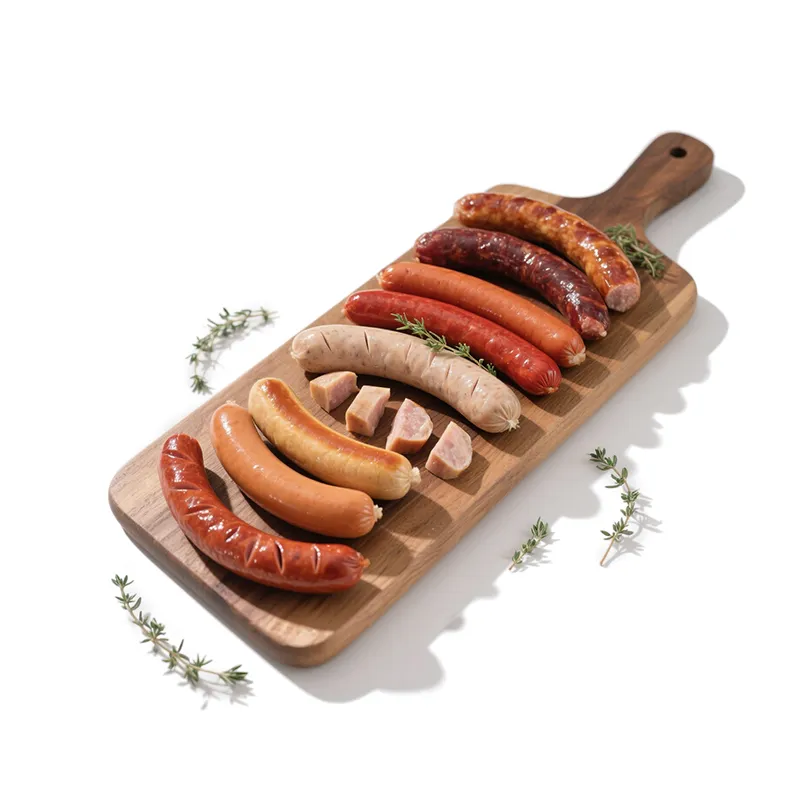
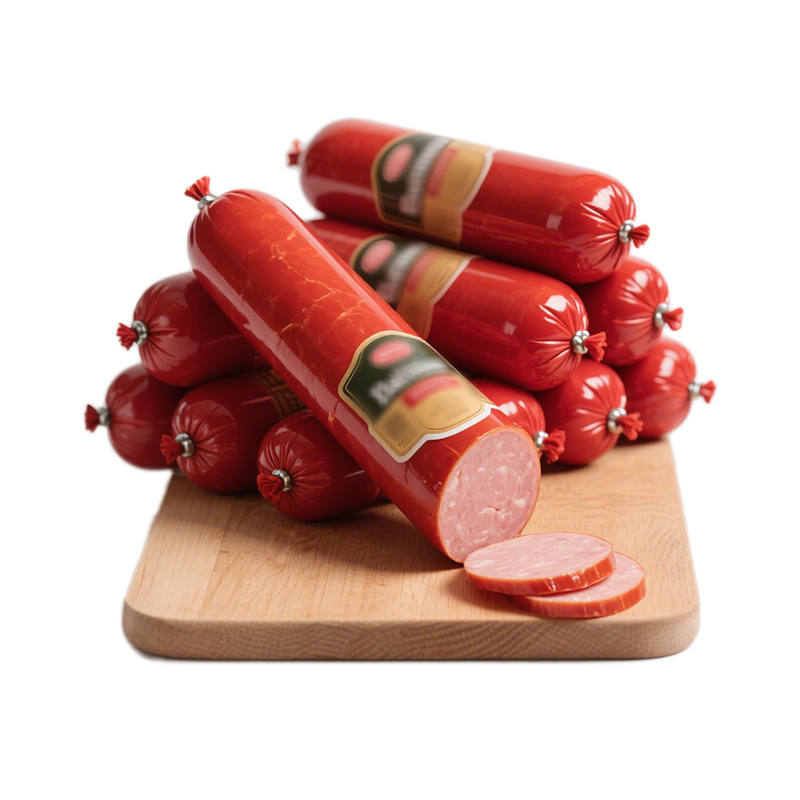
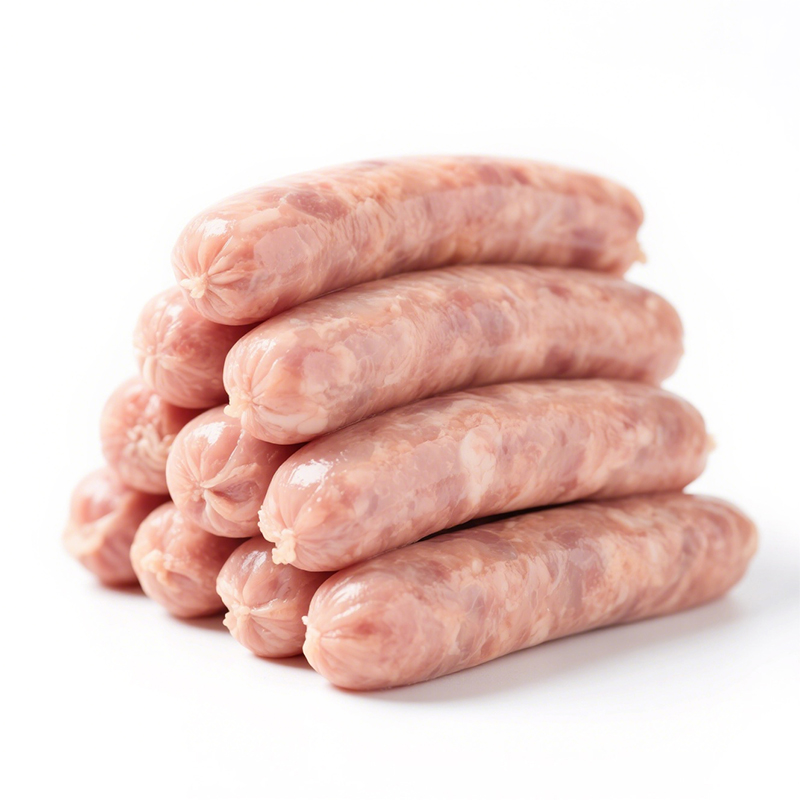

For meat-processing factories serving multiple customers, product variety is becoming an important equipment-selection consideration.
A contract manufacturer may need to produce cooked ham sausages for one customer, Polony-style sausages for another, and different steamed or cooked sausage products for private-label orders. These products can require different casing materials, diameters, portion lengths, clip specifications, and downstream processing conditions.
This raises a practical procurement question:
What kinds of products can a fully-integrated clipped ham sausage production line efficiently handle?
The answer depends on the equipment configuration, product formulation, casing specifications, clip size, and required production capacity.
A properly configured clipped ham sausage line multi-product solution can potentially handle several types of emulsified or processed sausage products within one production system, reducing the need to install a completely separate line for every SKU.
For meat factories producing multiple products, the real value is therefore not simply automation. It is production flexibility.
This article explains which products and casing types can potentially be handled, what buyers should confirm before ordering, and when a modular integrated ham sausage production line is more suitable than a dedicated single-product line.
1. Why Do Multi-SKU Meat Factories Need a Flexible Clipped Sausage Line?
A single-product sausage factory can optimize its equipment around one fixed specification.
A multi-SKU factory faces a different challenge.
Different customers may require:
Different sausage diameters
Different portion lengths
Different product weights
Different casing materials
Different clip sizes
Different recipes
Different production volumes
Different packaging requirements
If the factory needs major mechanical modifications every time it changes products, the equipment may become a production bottleneck.
This is especially important for meat-processing OEM and private-label manufacturers.
They may receive several smaller orders instead of one very large order for a single standardized product.
Therefore, the ideal production line should provide a balance between:
Product flexibility + Changeover efficiency + Production stability + Cleaning requirements + Investment cost
This is where an integrated clipped ham sausage line can provide a potential advantage.
2. What Products Can an Integrated Ham Sausage Making Line Handle?
The exact product range depends on the machine configuration and product characteristics.
However, a properly designed integrated ham sausage making line can be evaluated for several common categories of processed sausage products.
2.1 Cooked Ham Sausages
Cooked ham sausage is one of the typical applications for a clipping-based production process.
The production line can be configured around the required:
Product diameter
Product length
Casing material
Filling characteristics
Clip specification
Production capacity
The sausage is filled into the casing and closed with clips to create a controlled and secure package before downstream cooking or processing.
For factories producing several cooked sausage SKUs, adjustable parameters can make the same basic production platform more flexible.
3. Can the Line Produce Steamed or Cooked Sausage Products?
Potentially, yes.
Many meat factories produce steamed, cooked, or heat-processed sausage products with different recipes and dimensions.
From an equipment-selection perspective, the important question is not simply whether the product is called a "steamed sausage."
The buyer should confirm:
Product formulation
Filling characteristics
Casing material
Casing diameter
Target product length
Clip specification
Required filling capacity
Downstream cooking process
A properly configured clipping and filling system can then be evaluated according to these actual parameters.
This is more reliable than selecting equipment based only on the general product name.
4. Is Polony Sausage Suitable for This Type of Production Line?
Polony-style sausage products can also be considered for an integrated clipping production line when their formulation, casing, dimensions, and closing requirements fall within the machine's applicable range.
Polony products can vary considerably between markets and manufacturers.
Some factories may produce:
Large-diameter Polony
Smaller snack-style products
Different emulsified meat formulations
Different casing specifications
Different finished-product lengths
Therefore, the production line should be selected based on the actual product specification rather than assuming that every Polony product has identical processing requirements.
For contract manufacturers, this distinction is particularly important because customer specifications can change from project to project.
5. Can One Line Handle Different Casing Types?
Casing compatibility is one of the most important factors in varying casing types sausage production.
A multi-product factory may use different casing materials depending on the product.
Potential applications can include:
Plastic Casings
Plastic casings are commonly used for certain cooked and processed sausage products.
Their standardized dimensions can support automated filling and clipping when the machine configuration matches the casing specifications.
Composite Casings
Composite or multilayer casings may be selected for products requiring particular barrier, mechanical, or processing characteristics.
The factory should confirm the actual casing structure and mechanical properties before finalizing the equipment configuration.
Different Casing Diameters
Even within the same casing material, diameter differences can affect filling, clipping, and product handling.
For this reason, buyers should provide the supplier with the complete casing specification rather than simply stating "plastic casing" or "composite casing."
The key procurement principle is:
Casing material compatibility ≠ complete casing compatibility.
Diameter, thickness, mechanical strength, filling characteristics, and clip requirements must also be considered.
6. What About Different U-Shaped Clip Specifications?
Clip compatibility is another important consideration for a clipped sausage production line.
Different products may require different U-shaped clip sizes depending on:
Casing diameter
Product size
Casing material
Filling pressure
Closure requirements
Downstream processing conditions
A multi-SKU factory should therefore confirm whether the proposed clipping system can accommodate the required clip specifications.
Before purchasing, buyers should provide:
Current clip size
Alternative clip sizes
Casing diameter
Casing material
Product dimensions
The supplier can then determine the appropriate clipping configuration.
For factories expecting frequent product changes, the ease of changing compatible clip specifications should also be considered.
7. How Does Quick Changeover Work in Multi-Product Production?
One of the main concerns for meat-processing factories is whether switching between products requires extensive mechanical modification.
A well-planned modular system should aim to minimize unnecessary hardware changes.
Depending on the machine configuration, product changeover may involve adjustments to:
Filling parameters
Product length
Portion settings
Casing-related components
Clip specifications
Conveyor or transfer settings
Control-system recipes
The goal is not to claim that every product can be switched instantly.
Instead, the objective is to make routine SKU changeovers controlled, repeatable, and predictable.
For a contract manufacturer producing many products in smaller batches, this can have a significant impact on effective production capacity.
8. Does Multi-Product Capability Mean No Hardware Changes Are Required?
Not necessarily.
This is an important distinction for procurement teams.
A flexible production line does not mean that every sausage product can be processed using exactly the same mechanical configuration.
Some product changes may require:
Changing compatible clip components
Adjusting casing-related components
Changing product guides
Adjusting filling parameters
Changing machine settings
Cleaning and sanitation between products
However, a properly designed modular line can avoid large-scale hardware modification for routine product changes that fall within its intended operating range.
The practical procurement objective should therefore be:
Minimal necessary changeover work, rather than unrealistic "zero adjustment."
9. What Technical Parameters Should Buyers Evaluate?
For a clipped ham sausage line multi-product project, buyers should prepare a product matrix before requesting a quotation.
| Parameter | Product A | Product B | Product C |
|---|---|---|---|
| Product Type | Cooked Ham Sausage | Steamed Sausage | Polony |
| Casing Material | Plastic | Composite | Plastic |
| Casing Diameter | Actual Data | Actual Data | Actual Data |
| Target Weight | Actual Data | Actual Data | Actual Data |
| Product Length | Actual Data | Actual Data | Actual Data |
| Clip Size | Actual Data | Actual Data | Actual Data |
| Recipe | Actual Data | Actual Data | Actual Data |
| Production Capacity | Actual Data | Actual Data | Actual Data |
This product matrix gives the equipment supplier a much clearer understanding of the required production range.
It is considerably more useful than simply saying:
"We need one machine for different sausages."
10. Which Production Parameters Affect Equipment Selection?
Several parameters can determine whether a multi-product line is technically suitable.
Product Diameter
Large differences in diameter may require different filling or clipping configurations.
Product Length
Different finished lengths can influence filling, clipping, cutting, conveying, and packaging requirements.
Product Formulation
Meat particle size, fat content, moisture, temperature, and formulation can influence filling behavior.
Casing Characteristics
Casing material, thickness, elasticity, diameter, and mechanical strength can affect the filling and clipping process.
Clip Size
The selected clip must be compatible with the casing and product dimensions.
Production Capacity
A line should be sized according to the factory's realistic production requirement, not simply its maximum theoretical SKU range.
11. What Products May Not Be Suitable for This Type of Line?
A professional supplier should also explain the limitations.
A clipped ham sausage production line may not be the ideal solution for every sausage product.
For example, additional evaluation may be required for products that have:
Highly irregular shapes
Very unusual casing structures
Extremely large diameter variations
Special stuffing characteristics
Unusual closure requirements
Product formulations outside the normal filling range
Production processes requiring completely different forming methods
Fresh-link sausages may also require a different production configuration from large-format clipped cooked sausages.
Similarly, products using casings or closure systems outside the machine's compatible range should not be assumed to be suitable.
This is why product samples and technical specifications should be reviewed before final equipment selection.
12. Is a Multi-Product Line Suitable for Meat Processing OEM Factories?
This is one of the strongest application scenarios.
OEM and private-label meat processors often face a combination of:
High SKU Count + Different Customer Specifications + Variable Order Volumes
A dedicated production line for every product can result in:
High equipment investment
Low equipment utilization
More floor-space requirements
More maintenance points
More operators
Difficult production scheduling
A modular integrated line can potentially allow the factory to use one production platform across several compatible products.
This does not mean that every SKU must run through the exact same configuration.
Instead, the line can be designed around a defined product family.
13. When Is a Dedicated Line Better?
A fully integrated multi-product line is not always the best option.
A dedicated production line can make more sense when:
One product accounts for most of the factory's production
Production volume is extremely high
The product specification rarely changes
Maximum throughput is more important than flexibility
Changeovers are very infrequent
The product requires highly specialized equipment
For example, a factory producing one standard sausage SKU around the clock may benefit more from a highly optimized dedicated line than a flexible multi-product system.
Therefore, flexibility should be purchased only when the factory actually needs it.
14. When Is a Multi-Product Integrated Line More Suitable?
A flexible integrated ham sausage making line is particularly worth considering when the factory:
Produces multiple sausage SKUs
Serves multiple private-label customers
Frequently changes product specifications
Uses different casing materials
Uses several compatible clip sizes
Needs to reduce production changeover complexity
Wants to expand its product portfolio
Has limited factory space
Wants to avoid installing one complete line for every SKU
This makes the solution particularly relevant to meat-processing contract manufacturers.
15. How Can Aokai Customize a Multi-Product Production Solution?
Foshan Aokai Machinery Technology Co.,Ltd provides sausage and common meat-processing machinery solutions for factories with different production requirements.
For multi-SKU projects, Aokai can evaluate the factory's product portfolio before recommending a configuration.
The process can include:
Product Portfolio Assessment
Review the factory's main products, casing types, diameters, lengths, weights, and clip requirements.
Equipment Configuration
Determine which modules need to be configured for the product family.
Modular Design
Where appropriate, the line can be planned so that compatible product changes require parameter adjustments or limited component changes rather than major equipment reconstruction.
Existing Equipment Integration
If the factory already owns suitable upstream or downstream equipment, the new line can be evaluated for integration rather than automatically replacing every machine.
Complete Line Solution
For new factories or major expansion projects, Aokai can provide a broader sausage-processing equipment solution according to the production workflow.
The objective is to create a production platform that matches the factory's actual SKU portfolio rather than selling an unnecessarily standardized configuration.
16. What Should Buyers Prepare Before Requesting a Quotation?
For a multi-product project, the quality of the initial technical information can significantly affect the accuracy of equipment recommendations.
Buyers should prepare:
Product Information
Product names
Product photographs
Target weights
Product diameters
Product lengths
Product formulations
Product temperature
Casing Information
Casing material
Casing diameter
Casing thickness
Casing supplier/specification
Plastic or composite casing requirements
Clipping Information
Current U-shaped clip sizes
Required clip sizes
Closure requirements
Product dimensions
Production Information
Number of SKUs
Daily production volume
Production hours
Average batch size
Expected future capacity
Estimated changeover frequency
Factory Information
Existing equipment
Available installation area
Upstream equipment
Downstream equipment
Packaging requirements
This information allows Aokai to determine whether a standard configuration, modular configuration, or customized production line is the better option.
17. A Practical Procurement Decision: One Line or Multiple Lines?
For a multi-SKU factory, the following framework can help:
| Factory Condition | Recommended Approach |
|---|---|
| One dominant SKU | Dedicated line may be more economical |
| Several compatible SKUs | Multi-product integrated line |
| Different casing materials | Confirm casing compatibility before purchase |
| Multiple U-shaped clip sizes | Verify clipping module flexibility |
| Frequent product changes | Prioritize quick-change configuration |
| New factory | Consider complete integrated solution |
| Existing factory expansion | Evaluate modular expansion |
| Existing equipment still usable | Consider partial integration |
| Highly specialized products | Evaluate dedicated equipment |
The objective is to compare total production economics, not simply equipment purchase price.
18. What Is the Real Cost Advantage of a Multi-Product Line?
The value of a multi-product line can come from better equipment utilization.
Suppose a factory needs to produce five compatible sausage products.
Installing five separate production lines could require:
Five sets of filling equipment
Five clipping systems
More conveyors
More floor space
More operators
More maintenance
Higher capital expenditure
A modular multi-product system can potentially consolidate some of these functions.
However, the actual economic benefit depends on:
SKU Count + Production Volume + Changeover Frequency + Product Compatibility + Equipment Utilization
Therefore, buyers should calculate the expected utilization of the proposed line rather than assuming that multi-product capability automatically means lower cost.
19. Final Procurement Answer: What Can a Fully-Integrated Clipped Ham Sausage Line Handle?
A properly configured clipped sausage production line can potentially handle a product family that includes cooked ham sausages, steamed or cooked sausage products, Polony-style sausages, and other compatible clipped meat products.
It may also be configured for different plastic and composite casing specifications and compatible U-shaped clip sizes, provided that the actual product, casing, diameter, and closure requirements fall within the machine's applicable range.
The key point is that multi-product capability is a configuration issue, not simply a machine-label issue.
Before purchasing, factories should evaluate:
Product → Casing → Diameter → Weight → Length → Clip → Production Capacity → Changeover Requirements
This provides a much more reliable basis for equipment selection.
Conclusion
For meat-processing OEM and private-label factories, flexibility can be as important as production speed.
A clipped ham sausage line multi-product solution can potentially allow one production platform to handle several compatible sausage categories while reducing the need for separate dedicated equipment.
The most suitable applications include factories producing multiple cooked, steamed, Polony-style, and similar clipped sausage products with compatible casing and closure requirements.
However, buyers should not assume that every SKU can be changed without any adjustment.
The right approach is to define the factory's product family first, then design the line around the actual casing types, clip specifications, product dimensions, production capacity, and expected changeover frequency.
With a modular approach, Foshan Aokai Machinery Technology Co.,Ltd can evaluate individual equipment requirements or provide a customized integrated solution for new production projects, factory expansion, and multi-SKU meat-processing operations.
For a product compatibility assessment or customized quotation, provide your sausage specifications, casing details, clip sizes, production capacity, and current production-line layout.
WhatsApp: +44 7835782930
E-mail: info@fsaokai.com
Website: www.aokaimachine.com